

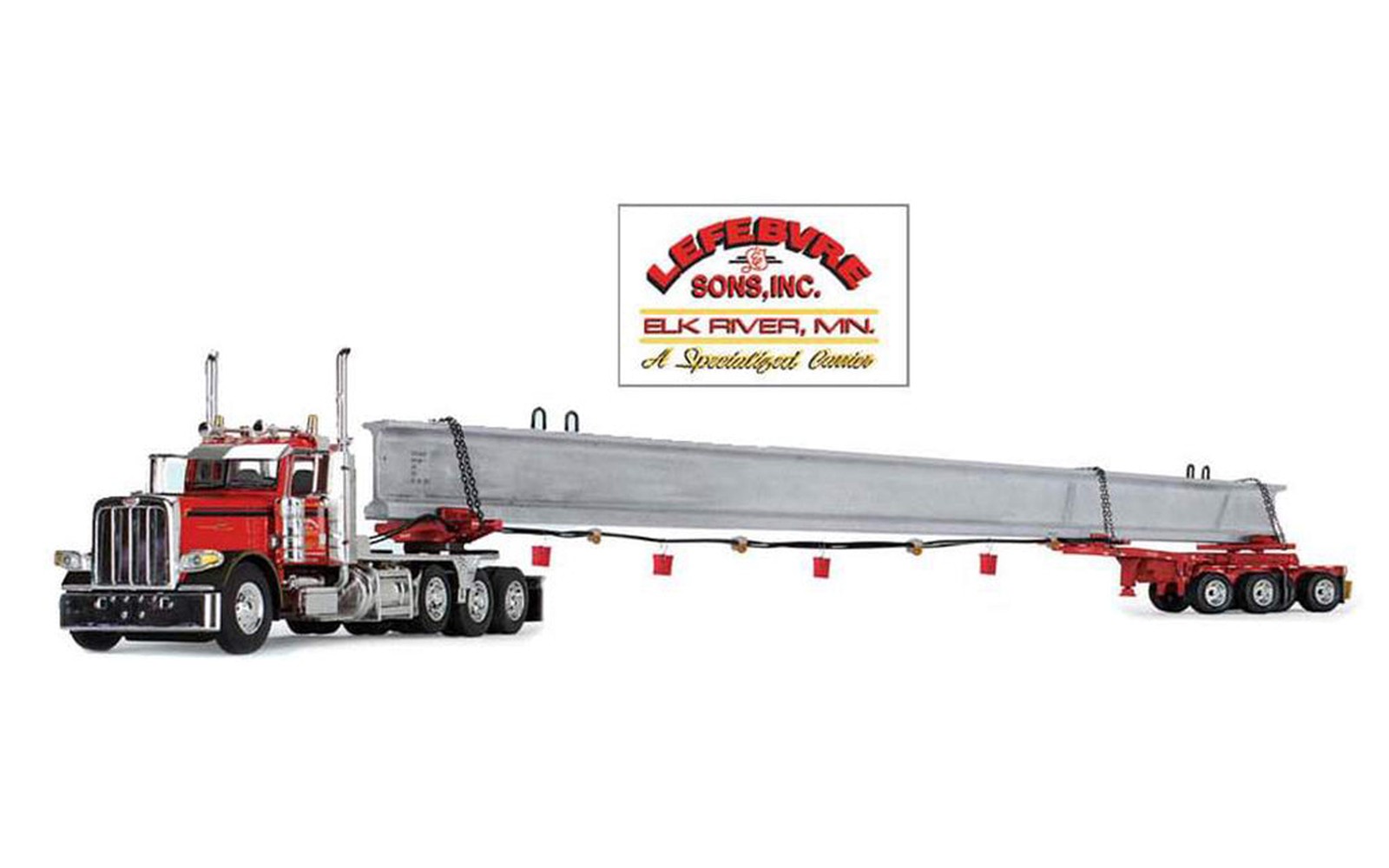
Peterbilt 389 Financing
Finance a new or used Peterbilt 389 for oilfield hauling and heavy transport. Loans from $50k. Challenged credit reviewed. Streamlined oilfield files near $400k. Oilfield lender review after the complete file.
Few trucks carry as much identity in the heavy trucking world as the Peterbilt 389. The long-hood conventional with its wide chrome smile and extended cab configurations has held a premium position in the owner-operator market since its introduction, and in oilfield service it appears regularly on OCTG hauls, heavy equipment moves, and long-distance fluid transport runs between basins. Operators who run the 389 run it because they want to, not because they had no other option, and that driver loyalty creates a secondary market with consistent demand that lenders understand.
We finance the Peterbilt 389 for oilfield buyers across the range from recent-year new units to used trucks with high mileage and documented rebuild history. Our Peterbilt oilfield financing program starts at a $50,000 minimum and covers flatbeds, tankers, step decks, and light vocational builds on the 389 platform. We fund in field-ticket review after a complete application and we consider B/C credit profiles when the operational picture supports it.
Why the 389 Keeps Showing Up in the Oilfield
The Peterbilt 389 is built on Peterbilt's Model 389 frame, which is a conventional long-hood designed for owner-operator aesthetics and highway performance. The current production version uses the PACCAR MX-13 as the standard powertrain with Cummins X15 available as an option, and Eaton Fuller automated manuals have largely replaced synchronized transmissions in recent-year builds. The result is a truck with serious horsepower, a comfortable cab for long-distance runs, and a transmission that reduces driver fatigue on extended hauls between basin locations.
In oilfield trucking, the 389 most often appears under flatbed and step-deck configurations hauling tubular goods (OCTG), structural steel for tank batteries and production facilities, large equipment components, and oilfield supplies between supply yards and active well sites. The combination of payload capacity, legal road presence, and gross vehicle weight (GVW) handling puts the 389 in competition with the Kenworth W900 for driver preference and fleet procurement.
Pipeline contractors running spread work in the Appalachian basin or the Permian use 389-based flatbeds on materials hauls where the combination of payload and legal size limits matters as much as cost per mile. The 389's wheelbase options let operators configure the truck for specific body lengths without compromising turning radius on tight right-of-ways.
The 389 also appears in oilfield service roles through oilfield construction companies that run tandem flatbeds and step decks on facility construction and pipeline support projects. In those applications the 389 is a workhorse that hauls whatever the job needs, from prefabricated pipe sections to rented equipment being repositioned across the project.
How We Structure Peterbilt 389 Financing
Most 389 financing transactions run through a standard equipment loan where you own the truck from day one. The loan is secured by the vehicle title and repaid over three to seven years depending on the year and condition of the truck. Monthly payments are fixed, which makes cash flow planning straightforward on a contract that pays a consistent rate per mile or per load.
For buyers who prefer to preserve capital, an TRAC lease is worth considering. A TRAC lease (Terminal Rental Adjustment Clause) gives you a lower monthly payment than an outright loan, with a defined residual value at the end of the term that you can pay to own, apply toward a replacement truck, or negotiate down based on actual market value. TRAC leases are common for commercial trucks used in interstate commerce and the Peterbilt 389 qualifies.
For buyers considering whether this makes sense versus a dollar buyout lease, the key difference is the end-of-term structure. A dollar buyout lease guarantees you own the truck at lease end for $1, functioning more like a loan with lease payment treatment. The TRAC lease keeps the residual open, which reduces payments but introduces end-of-term settlement. We can model both options with actual payment illustrations so you can pick the structure that fits your situation.
389 Market Conditions for Oilfield Buyers
The 389's resale market has historically held value better than comparable conventional platforms because of sustained owner-operator demand. New units currently price running about $180k to $240k with standard equipment before options. Used units from 2016 to 2022 trade actively running about $90k to $175k depending on mileage and specification.
For buyers who operate in the Permian or DJ Basin, the truck's popularity in the OCTG transport segment means that a contract with a major pipe supplier or tubular goods distributor can be a qualifying factor in financing. The customer quality and contract length matter to underwriters, and a 389 on a long-term pipe haul contract presents differently than one chasing spot loads.
Operators in the Bakken and Wyoming Powder River basin use the 389 on longer hauls where the cab comfort and fuel efficiency of the current PACCAR powertrain translate to real cost differences over the life of a contract. The truck's fuel consumption with the MX-13 on highway-weighted routes has improved measurably in recent production years, which changes the total cost of ownership calculation relative to older engine generations in the same platform.
Related routes worth a look include Freightliner Financing, and Volvo Construction Equipment Financing.
Start Your Peterbilt 389 Financing Application
Give us the year, mileage, body configuration, and the purchase price you are working with. We handle new and used 389s, B/C credit, private party purchases, and auction buys. Minimum $50,000 and we fund in about one to two weeks.
Questions before you send the file.
Straight answers about peterbilt 389 financing, documentation, timing, and equipment eligibility.
Can I finance a Peterbilt 389 that I want to run as an owner-operator on a long-term oilfield contract?
Owner-operator financing on the 389 is one of the most common transaction types we handle. The personal credit of the individual guarantor is the primary underwriting factor, along with the quality of the contract or operating authority you have in place. A long-term oilfield contract with a creditworthy customer significantly strengthens the application.
The 389 I want has a Cummins X15 rather than the PACCAR MX-13. Does that affect financing?
Both powertrain options are acceptable from a financing standpoint. Some buyers and lenders have a slight preference for one over the other in specific market regions, but the engine choice alone does not materially change the structure or terms of the financing. What matters more is the engine's condition, service history, and hours or mileage.
Can I add a reefer or specialized trailer in the same financing package as the 389?
We primarily finance the truck itself through this program. Trailer financing can sometimes be included in a combined transaction if the trailer is a defined part of the package, but trailers and trucks typically carry different financing terms because of their different collateral profiles. Reach out and we can structure the pieces in a way that makes sense.
I put my 389 up as collateral for a business loan two years ago. Can I refinance the truck out of that and into a proper equipment loan?
A refinance that separates the truck from a cross-collateralized business loan is a common request. We pay off the portion of the business loan attributable to the truck and issue a clean equipment loan secured by the title. The terms on a properly structured equipment loan are almost always better than the all-in cost embedded in a general business loan.
How much of a down payment do I need to put down on a used 389?
Down payment requirements vary by credit profile and deal structure. Well-qualified borrowers with strong credit and a defined contract in place sometimes close with no down payment on used trucks in this price range. Borrowers with thinner credit profiles or shorter business histories are typically asked to put 10 to 20 percent down to reduce the lender's advance-to-value exposure. We tell you the specific requirement with the quote.
Quote desk
Get terms on Peterbilt 389 Financing.
Send the asset details, seller quote, and target timing. We will review the request and tell you what documentation is needed next.