

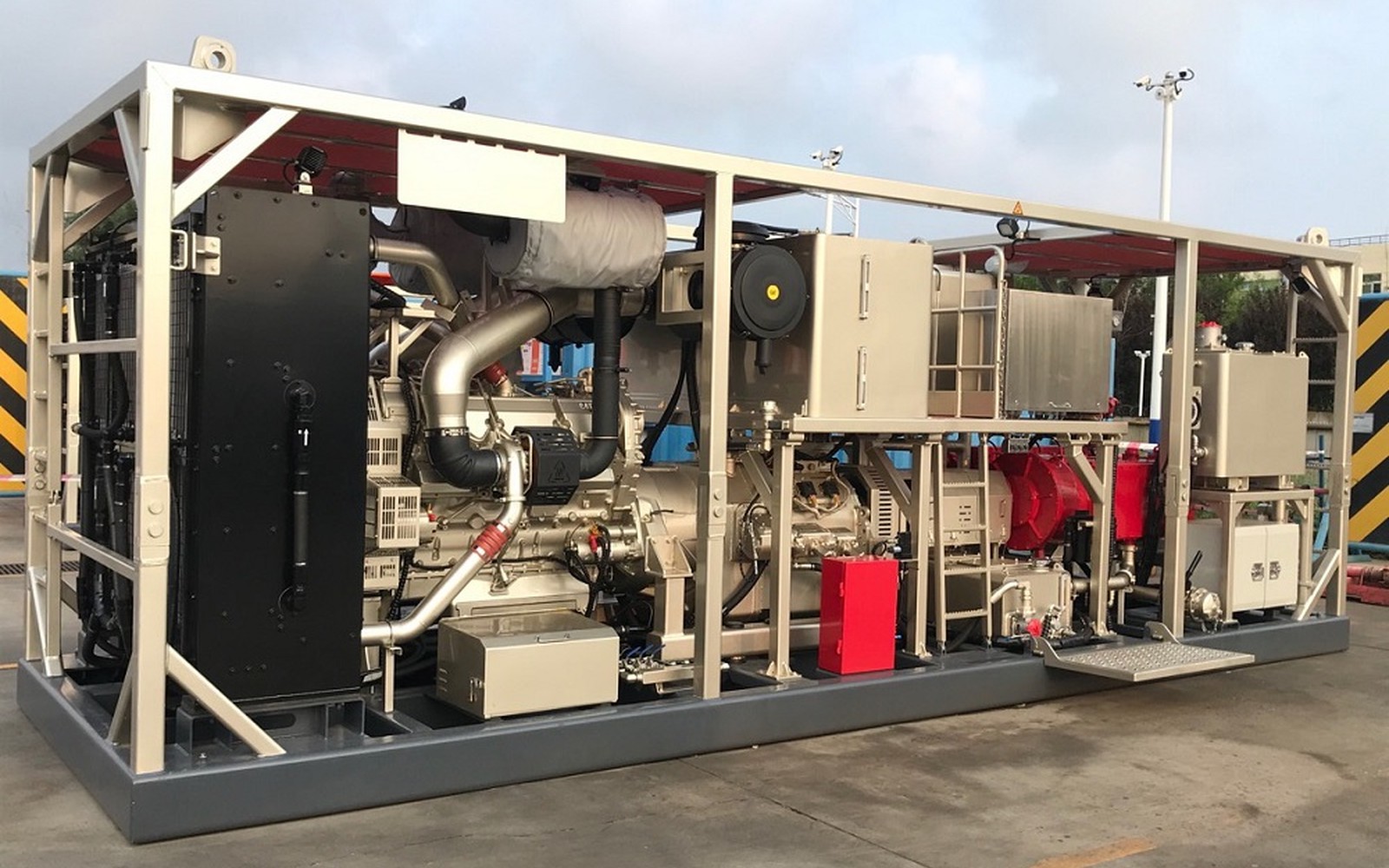
Compressor Package Financing
Finance complete compressor packages including frame, engine, cooler, and piping for oilfield production and gathering. Loans and leases from $50k, B/C credit.
Buying a compressor frame without the engine, cooler, and controls is buying half a compressor. Operators who finance compression packages as integrated units get the asset that actually goes on location, not a collection of components that require separate financing conversations. We structure compressor package financing around the complete unit: the reciprocating or centrifugal frame, the prime mover, the aerial cooler or water-cooled system, the control panel, and the skid, all under one approval.
Compressor packages designed for reciprocating frames are the most common transaction in active production and gathering basins. An Ariel JGC or JGK frame driven by a Waukesha VHP or Caterpillar engine is the configuration that moves the most gas in the field and the one that lenders have the most data on for collateral purposes. Fully packaged unit prices depend heavily on horsepower: a 200 to 400 horsepower package typically falls running about $300k to $600k new, with used units of comparable size available from $120,000 to $350,000 depending on condition and hours. Larger gathering station packages in the 800 to 1,200 horsepower range can approach $1 million to $2 million fully configured.
We work with gas compression rental companies and independent oil and gas producers who are purchasing packages for their own production facilities. Both buyer types are active in our portfolio, and the financing structure varies depending on whether the asset will be placed on a contract or operated in-house.
New packages versus used compression: the financing difference
New compressor packages from OEM packagers come with warranty coverage, known history, and the ability to specify exactly the configuration needed for the application. They also command the highest prices and typically require larger down payments. Some buyers prefer to finance new packages under a capital lease that preserves working capital and provides tax flexibility, rather than tying up cash in a large down payment on a straight loan.
Used compressor packages represent the majority of transactions we see, particularly in the mid-horsepower range. A well-maintained 500 to 600 horsepower package with recent cylinder work, a fresh engine overhaul, and current certifications is often a better economic choice than a new unit for operators who understand the equipment and can perform their own maintenance. Used packages finance well when they have documentation: overhaul records, hours logs, and evidence of regular valve and ring service.
The challenge with used packages is that not all sellers document their maintenance history consistently, particularly when the unit was run by a field crew without formal record-keeping. If documentation is thin, an independent inspection by a qualified compression technician before closing can establish condition and support the lender's collateral valuation. We have relationships with inspection services who understand compression equipment and can turn around a report quickly when a deal needs to close on a tight timeline.
For operators who want flexibility at end of term, an equipment lease structure on a used package can make sense. A shorter lease term with a fair market value option at the end gives you the option to upgrade to a newer unit without being locked into aging equipment.
What types of compressor packages qualify for financing
Reciprocating compressor packages are the core product we finance most frequently, but the program is not limited to them. We also finance:
- Centrifugal compressor packages for high-volume gathering and midstream applications
- Screw compressor packages used in gas lift, vapor recovery, and coal bed methane applications
- Natural gas engine-driven packages where the unit uses produced gas as fuel
- Electrically driven compressor packages for locations with available grid power
- Multi-stage packages configured for higher-pressure boosting applications
Equipment age and condition drive eligibility more than type. We have financed packages that are 20-plus years old when they have been well-maintained and are actively earning. We have also declined deals on packages less than five years old when the documentation was absent and the condition was unknown. The asset tells the story, and the documentation is what allows lenders to read it accurately.
For compression packages being purchased from an estate, bankruptcy proceeding, or distressed seller, special considerations apply. These transactions require additional due diligence and sometimes an independent appraisal, but they are financeable when the underlying asset is sound. We have experience with packages acquired through these channels and can structure the financing appropriately.
Credit requirements and documentation
Standard commercial compression package financing starts with a completed application and the equipment details. For deals under $400,000, short-form approval is often available, with the decision coming back in two to three business days. Larger transactions or borrowers with credit challenges will need recent operating statements as a minimum, and sometimes a prior year tax return.
B/C credit programs are available for operators with scores in the 580 to 650 range, though the down payment requirement is typically higher and the rate reflects the additional risk. What moves a B/C approval forward is strong current cash flow, evidence of active contracts, and a clear explanation of what drove the credit impairment. A downturn-era slowdown is understood in this business; a pattern of ongoing defaults is a different situation.
For new business owners who are establishing their first compression rental operation, personal credit and the strength of any contracts in hand are the primary underwriting inputs. We work with startup financing programs for operators with the right background who are building their first fleet.
Many operators pair this with Oilfield Challenged-Credit Financing, Short-Form Oilfield Financing, and Working Capital Loans.
Questions before you send the file.
Straight answers about compressor package financing, documentation, timing, and equipment eligibility.
Can I finance a compressor package that is currently in another country and needs to be imported?
International equipment financing exists but is significantly more complex than a domestic transaction. You would need an import plan, customs documentation, and typically an independent inspection before we can put financing together. Domestic acquisitions are far faster to close. If the unit is already in the US or Canada, we are in much better shape to move quickly.
The package I want is listed for sale without engine hours disclosed. How does that affect the financing?
Unknown hours create uncertainty on collateral value and remaining service life. We would recommend commissioning an independent inspection that includes hours verification from the engine control module before committing to the purchase price. A lender will either require this or apply a conservative discount to the collateral value, which affects the loan-to-value and potentially your down payment requirement.
I want to add a second compressor package to a gathering system I already have operating. Can the existing package support the new financing?
The existing package can potentially serve as additional collateral in a cross-collateralized structure, which could improve the terms on the new financing. We assess what the existing unit is worth, what (if anything) is owed on it, and whether the incremental collateral meaningfully improves the deal structure.
Can I finance a package as a lease and then convert to ownership mid-term if I want to?
Some lease structures include a buyout option that can be exercised at specific points during the term, typically at the end of year one, two, or three. Not all lenders offer mid-term buyout flexibility, so if that is important to you, we structure the transaction with that feature from the start rather than trying to add it later.
What happens if the compressor package breaks down shortly after I buy it and I still owe the loan balance?
The financing obligation runs independent of the equipment's operational status. Equipment insurance is what protects you against mechanical breakdown losses. We recommend requiring breakdown coverage as a condition of the financing, and many of our programs require it. Make sure you have a comprehensive policy in place before the deal closes.
Quote desk
Get terms on Compressor Package Financing.
Send the asset details, seller quote, and target timing. We will review the request and tell you what documentation is needed next.