

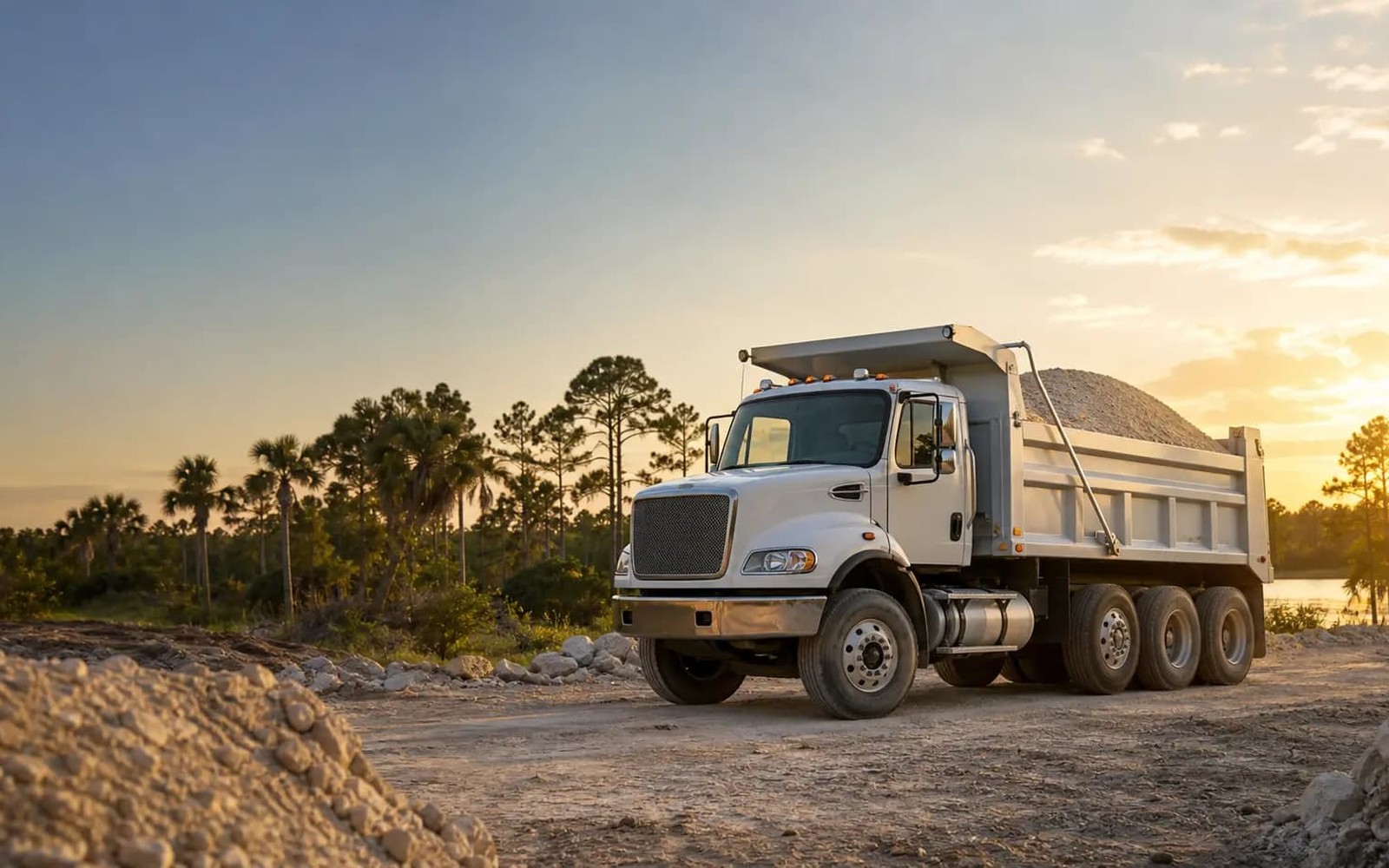
Water Hauling Companies
Equipment financing for oilfield water haulers: water trucks, transfer pumps, frac tanks, and vacuum tankers. Bad credit considered. Oilfield lender review after the complete file.
Freshwater for completions, flowback for disposal, produced water for transfer to an SWD facility. The oilfield runs on water logistics, and water hauling is one of the few oilfield services that stays busy across the full commodity cycle. When completions slow, produced-water volumes from existing wells keep the loads coming. That counter-cyclical durability makes water haulers a segment we know how to finance well, because the asset performance story holds up even when oil prices soften.
We work with water hauling companies from sole-operator setups running two or three tankers to multi-truck fleets servicing dedicated pad sites in the Delaware Basin, the DJ Basin, and the Bakken. Minimum transaction is $50,000; deals running about $100k to $150k and above are where we do most of our volume. New and used tanker trucks and ancillary equipment both qualify. Short-form approvals up to roughly $400,000 keep the paperwork lean for straightforward purchases. Recent operating statements and asset details start the file.
Equipment Water Haulers Finance With Us
The core asset is the tanker truck: a Class 8 chassis configured with an aluminum or stainless water tank, typically 100 to 130 barrels for oilfield routes. We finance the chassis and tank body as a single package. Peterbilt, Kenworth, Mack, and Freightliner chassis are all common; the tank body brand is generally secondary to the chassis condition and the overall asset value.
Beyond the primary tanker, water hauling fleets use a range of supporting equipment we also finance:
- Vacuum tanker trucks for produced water and slurry loads where suction-fill capability is required. Oilfield vacuum tankers often run 100 to 130-barrel tanks with PTO-driven pumps.
- Water transfer pumps and skid-mounted pump systems for high-volume pit-to-pit or pit-to-truck transfers. Water transfer pump financing covers centrifugal and turbine pump packages mounted on trailers or skids.
- Frac tanks used for temporary storage on location. A water hauler supplying a completion job often needs to own the staging tanks. Frac tank financing handles those as stand-alone assets or as part of a larger transaction.
- Storage tanks at a lease yard or staging area. Storage tank financing covers permanent and semi-permanent steel tanks.
Oilfield water haulers sometimes branch into related work: transporting saltwater to disposal facilities, hauling drilling mud, or moving produced fluids from temporary pits to a central storage point. Equipment used across those functions qualifies under the same financing programs.
What Drives Volume for Water Haulers in Active Basins
Hydraulic fracturing is water-intensive. A modern Permian completion can consume 50,000 to 60,000 barrels of water per stage, and multi-stage laterals running 10,000 feet or more generate enormous total water demand. Water sourcing logistics, flowback management, and produced-water disposal are all driven by that completions pace. When operators are running multiple simultaneous completions in a dense development area, truck demand spikes fast, and haulers who can put additional units in the field within days take the incremental work.
Produced-water volumes in mature basins like the Permian and the Williston have grown significantly as wells age and water cuts increase. That baseline volume is what smooths out the cycle for haulers who are not purely completion-dependent. Companies servicing both completions water and produced-water disposal routes have the most resilient revenue profiles in this segment, and that shows up in how we read their financials when structuring deals.
Credit Profiles and Documentation for Water Hauling Companies
Water hauling company financials track basin activity. A company operating in the Williston during 2020 may have two years of thin statements regardless of their operational quality. We read that context rather than applying a generic commercial-credit template. Three months of current bank statements, the asset details, and a description of your current customer base are enough to start most files.
B/C credit financing is available for operators whose personal or business credit was damaged in a down cycle. The asset and the current cash flow carry significant weight. Startup water hauling companies can explore startup equipment financing for their first unit or two, though advance rates and terms differ from seasoned operators with demonstrated history.
Who Uses These Programs
The water hauling operators who come to us most often fall into a few categories. First are the owner-operators adding a second or third truck after proving their route economics. They've got a solid customer relationship, they're turning down loads because they can't field the truck, and they want to finance the next unit against the revenue that truck will generate. Second are mid-size fleets replacing aging tankers. A 2012 or 2013 chassis with 500,000 miles and a tired tank is a liability on a long-haul water route; replacing it with a 2020 or newer keeps the driver, keeps the contract, and often lowers the maintenance spend enough to offset the payment.
Third are companies doing a sale-leaseback on owned equipment to fund an expansion or cover a working capital gap. A fleet of six to ten tankers that are owned outright represents meaningful capital. Sale-leaseback financing converts that equity without disrupting the operation. The trucks stay on the routes; the cash proceeds go to wherever the business needs them most.
Water haulers working in Midland and Carlsbad are particularly active customers for us given the sustained produced-water volumes out of the Permian and Delaware basins.
Get Your Water Hauling Fleet Financed
Tell us what trucks or equipment you need and where they'll be working. We structure deals around the way this business actually runs. Call or submit your details online and expect a same-day response on most files.
Questions before you send the file.
Straight answers about water hauling companies, documentation, timing, and equipment eligibility.
Can I finance a used tanker truck that has high mileage but strong maintenance records?
Yes. Mileage is a factor, not a disqualifier. A truck with 350,000 to 450,000 miles and documented preventive maintenance often qualifies. We look at the chassis year, the engine condition summary, and the overall asset value. An independent inspection is sometimes required on higher-mileage units.
I have a frac tank contract that needs me to put tanks on location by a certain date. How fast can you close?
Most straightforward purchase transactions fund within one to two weeks of a complete file. If the seller can produce clean title documentation quickly and your bank statements are ready, the timeline can compress. Tell us the deadline and we'll be direct about whether it's achievable.
My water hauling company is two years old. Do I qualify, or is this only for established operators?
Two years of operating history is generally enough to access standard programs. We want to see three months of bank statements and a consistent revenue picture. Entities under 12 months old fall into startup financing territory with different terms, but a two-year-old company with steady hauling revenue is a standard file for us.
Can I refinance a tanker truck I bought 18 months ago to lower my monthly payment?
Yes. Equipment refinancing on a truck you've been paying on for 12 to 18 months is common. If the current payoff is below the current market value, there may be equity to pull as well. We need the payoff statement from the current lender and three months of bank statements to get started.
Do you finance water transfer pump skids and frac tanks, or only trucks?
Both. Pump skids, frac tanks, and storage tanks all qualify as standalone equipment transactions, provided the total is at or above our $50,000 minimum. They can also be packaged with a truck purchase into a single note if the timing and vendor invoicing lines up.
Quote desk
Get terms on Water Hauling Companies.
Send the asset details, seller quote, and target timing. We will review the request and tell you what documentation is needed next.