

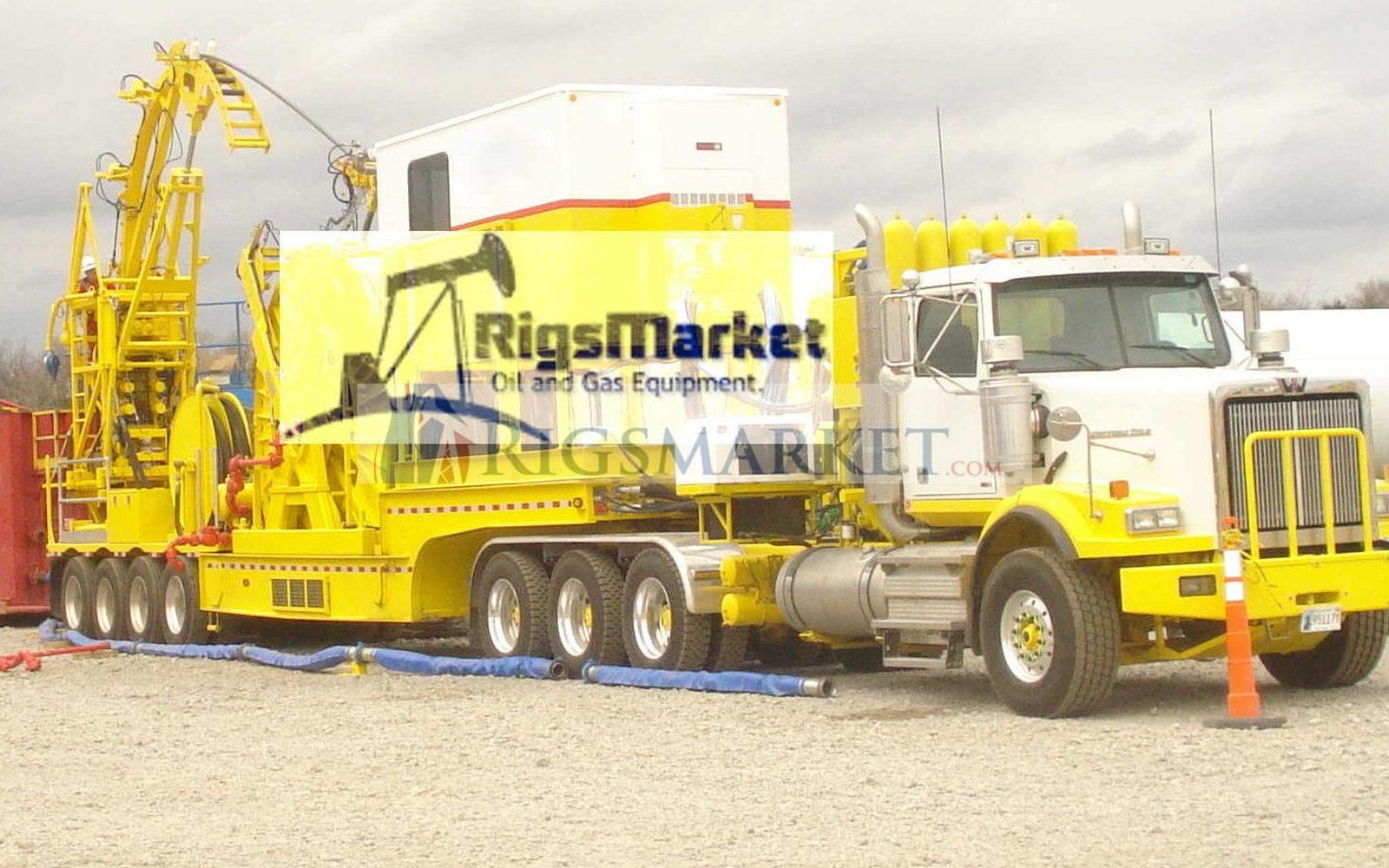
Coiled Tubing Unit Financing
Finance coiled tubing units for stimulation, nitrogen lift, milling, and wellbore cleanouts. Loans, leases, and sale-leaseback. B/C credit reviewed. Fund 1-2.
A coiled tubing unit gives a well service company access to work types that a conventional workover rig simply can't do without killing the well first. Sand cleanouts under pressure, gas lift conversions, milling out frac plugs after a completion, nitrogen lift to unload a well, and coiled tubing-conveyed perforating all require CT capability. The contractors who own that capability compete for a broader contract menu and typically run higher day rates than conventional units. Financing a coiled tubing unit is a capital commitment that changes what work a company can bid, and we structure these deals with that competitive logic in mind.
Our coiled tubing unit financing covers complete CT spreads, individual units bought without the support trailer, and used rigs acquired through the secondary market or from other service companies. Minimum deal size is $50,000, with most CT unit transactions running well into the six figures. We work with coiled tubing companies of all sizes. Structures include loans, oilfield equipment leases, and Equipment Sale-Leaseback arrangements for operators who need to release capital from units they already own.
Coiled Tubing Equipment: The Components and Their Value
A CT unit is more than the reel. The complete spread includes the injector head and gooseneck, the control cabin with instrumentation, the power pack, the wellhead pack-off and BOPs, and the tubing reel itself carrying the coil string. Tubing sizes in common use for oilfield work run from roughly 1.25 inches to 2.375 inches in diameter, with 1.5-inch and 1.75-inch strings covering the majority of onshore completion and workover applications. The diameter of the coil combined with the unit's maximum CT size rating determines what types of wells and operations the unit can serve.
Injector head capacity, measured in the maximum weight the unit can push into the wellbore against wellhead pressure, is a key performance spec. A 40,000-pound injector head serves a different range of wells than an 80,000-pound unit. Control cabin configuration (older analog instrumentation versus modern digital data acquisition) affects both the operational capability and the secondary market appeal. High-cycle operations put significant cumulative fatigue on the tubing string itself, and a worn string with documented cycle counts is a liability that an incoming buyer prices in. Lenders who understand CT assets evaluate the reel contents as part of the collateral picture, not just the unit itself.
- Common CT sizes: 1.25-inch, 1.5-inch, 1.75-inch, 2-inch, and 2.375-inch outside diameter
- Injector head ratings: 40,000 to 120,000 lb capacity for onshore operations
- String cycle tracking: documented cycle history affects both safety and resale value
- Control cabin instrumentation (analog versus digital) is a meaningful spec in the current market
Operators Who Use This Financing
Independent CT companies running one or two units and looking to add capacity or replace an aging unit are the most common borrower profile. These companies often have established relationships with production companies and E&P operators but operate with the lean balance sheets of a small service business. Short-form financing up to $400,000 is designed for this segment: it gives a one or two-rig operator access to capital without requiring the formal financial documentation that takes weeks to compile.
The second profile is the well service company that provides conventional workover services and wants to add CT capability to stop referring that business to competitors. Adding a CT unit to an existing fleet requires capital but generates new revenue from an existing customer base. Operators in Midland, TX, Lafayette, LA, and Casper, WY have used our financing to make exactly that transition. The third profile is the contractor acquiring a used unit from a competitor who is exiting the market or downsizing, through a private-party purchase structure.
Financing Terms for CT Units
Coiled tubing unit financing typically runs on terms of three to five years for used units and up to seven years for new units from established OEMs. Down payment requirements reflect credit quality and collateral clarity: clean credit with a well-documented used unit may require 10 to 15 percent down, while B/C credit deals typically need 20 to 30 percent. The condition and documented history of the tubing string has a real effect on the lender's advance rate against the unit, because a fresh string in a new unit is meaningfully different from a unit carrying a string with undocumented cumulative cycles.
The monthly payment structure should be aligned with how CT revenue comes in. Day-rate CT operations generate revenue when the unit is on a job, which can be lumpy depending on contract mix. We work with lenders who understand oilfield cash flow patterns and can structure payment schedules with that reality in mind. For contractors moving from conventional service work into CT for the first time, our new equipment line startup program provides options even when CT-specific revenue history isn't yet established.
Questions before you send the file.
Straight answers about coiled tubing unit financing, documentation, timing, and equipment eligibility.
Can I finance a CT unit if the tubing string needs replacement?
A CT unit with a worn or life-limited string is still financeable, but lenders will factor the string replacement cost into the collateral picture. If you're planning to replace the string immediately after purchase, having a quote for that work and a plan for funding it (either from cash or included in the financing) helps the lender model the post-purchase asset value accurately. Some deals can include string replacement costs in the overall financing package.
What documentation do CT companies need for an application-only deal?
Application-only deals require a completed credit application for the business entity, basic business information (time in business, principals, current liens), and a purchase agreement or dealer quote for the CT unit. No tax returns, P&L statements, or financial statements are required on the application-only track. This path is available for deals up to roughly $400,000 on equipment with clean title.
Is CT unit financing available for companies that only do completion-focused work (frac plug milling)?
Yes. Completion services including frac plug milling, wellbore cleanouts, and coiled tubing-conveyed perforating are all active work types that support a CT unit financing application. The revenue these operations generate demonstrates the economic case for the equipment, and lenders in our panel who work oilfield deals understand the completion services market.
Can I bundle the power pack and support trailers into the same CT unit deal?
Yes. Support equipment that is part of the CT spread (power pack, hydrostatic test unit, fluid pumping trailer) can often be included in the same financing facility as the primary CT unit. The bundle needs to meet our minimum transaction size ($50,000) and the total amount should reflect the actual market value of all included components, not a padded number.
How does financing a used CT unit from another service company work if there are existing liens on it?
A lien payoff is a normal part of used equipment financing. The existing lender receives their payoff from the sale proceeds at closing, and the new lender records a clean first lien on the unit. You don't take possession of the unit with the old lien attached. What we need is a payoff statement from the existing lender and the ability to confirm the title situation at closing.
Quote desk
Get terms on Coiled Tubing Unit Financing.
Send the asset details, seller quote, and target timing. We will review the request and tell you what documentation is needed next.