

Peterbilt Financing for Oilfield Trucks
Finance Peterbilt 367, 389, and 567 oilfield trucks. Loans for winch trucks, vacuum units, and heavy haul. $50k minimum, B/C credit considered, funded in 1-2.
Peterbilt builds the kind of truck that oilfield contractors spec by number rather than by description. The 367 handles heavy off-road haul and winch work in the Permian and Bakken because its set-forward front axle and high-clearance frame take the ground conditions that knock conventional trucks out of service. The 389 moves frac sand on paved routes and doubles as a long-nose conventional on routes between basins. The 567 covers vocational oilfield applications from vacuum service to produced water hauling where payload, PTO compatibility, and body mounting are the specs that matter.
A Peterbilt 367 rigged for oilfield winch or heavy haul can price out at $180,000 to $250,000 or more depending on axle configuration and body equipment. A properly spec'd 567 with a vacuum tank runs in a similar range. We finance Peterbilt oilfield trucks starting at $50,000, with no ceiling on fleet deals for qualified operators. Applications fund in roughly one to two weeks. Oilfield trucking companies adding trucks to serve new contracts or replacing units that have hit the end of their productive life need capital that closes fast, because the operator awarding the contract is not waiting on a financing timeline.
Peterbilt Oilfield Models We Finance
Peterbilt's heavy-duty commercial line includes several platforms that translate directly into oilfield service configurations. The models we finance most frequently for oil and gas applications include:
- Peterbilt 367 -- the purpose-built oilfield heavy-haul and winch truck platform; set-forward front axle, high-clearance frame rail, available in tandem and tri-drive axle configurations; the reference spec for Texas and Bakken rough-terrain moves
- Peterbilt 389 -- the long-nose conventional used for long-haul frac sand transport and heavy equipment moves on paved interstate routes; Cummins X15 or PACCAR MX-13 power
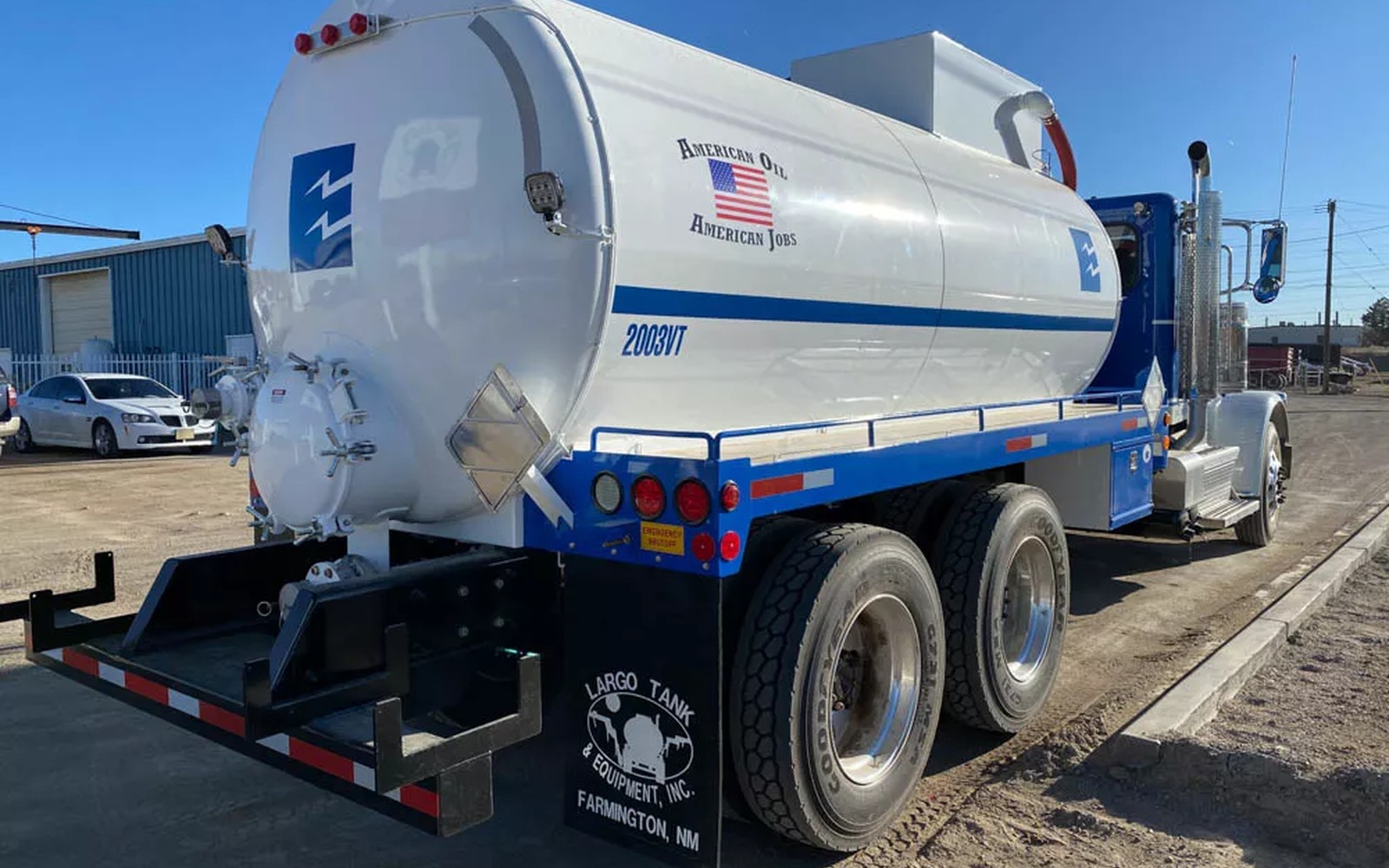
- Peterbilt 567 -- the current vocational heavy truck for oilfield body applications including vacuum tanks, produced water haulers, and hot oil units; PTO-friendly drivetrain and body-mount frame
- Peterbilt 579 and 589 class-8 tractors for line-haul chemical and sand routes between basins
Peterbilt trucks spec'd with oilfield-specific bodies are financed as complete configured units. A vacuum tank body, hot oil burner unit, or winch bed is part of the asset, not a separate item that gets excluded from collateral. The full configured truck is what earns the day rate, and we value it that way.
Oilfield Applications We Fund
Peterbilt appears in every oilfield trucking segment, and we have financed trucks across all of them.
Winch trucks and heavy haul: The 367 in particular is the dominant winch truck platform in the Permian Basin and Bakken, used for rig moves, equipment positioning, and heavy component transport. Winch truck operators typically work on short-term rig contracts where the financing needs to close when the contract does.
Vacuum and fluid hauling: Peterbilt 567 and T880-equivalent configurations with vacuum tank bodies for produced water, drilling mud, and pit cleaning. Activity in the Delaware Basin and the Midland side of the Permian generates heavy vacuum truck demand, and operators based in Midland and Pecos regularly run Peterbilt-heavy fleets.
Frac sand hauling: Peterbilt 389 day cab or sleeper configurations pulling pneumatic or belly dump trailers on sand routes from Kermit and Monahans to active frac spreads. High-utilization routes accumulate mileage fast on sand trucks, and used Peterbilt sand haulers with 400,000 or more miles still qualify when condition and documentation support the value.
Hot oil and hot water service: Peterbilt 567 with hot oil burner unit for paraffin treating, line thawing, and well stimulation on day-rate contracts. Hot oil truck operators run tight schedules in cold-weather basins including the Bakken and Pinedale.
Operators serving Williston, the DJ Basin out of Greeley, or Eagle Ford country out of Corpus Christi maintain Peterbilt-heavy fleets because parts availability and service infrastructure in those markets is strong.
New and Used Peterbilt Trucks
New Peterbilt trucks give operators the full OEM warranty, current emissions compliance, and a clean collateral picture from day one. For companies pursuing service contracts that specify model year requirements or emissions standards, new is often the correct choice, and the warranty coverage reduces the cost of unexpected downtime during early contract performance.
Used Peterbilt trucks are a substantial part of what we fund. The 367 and 389 have long service lives when maintained, and a Peterbilt in solid mechanical condition with documented service history is a bankable asset at appropriate loan-to-value levels. We do not apply blanket mileage cutoffs. A 367 with 350,000 miles in winch service, a clean inspection, and a current rig contract has more financing story to tell than its mileage suggests.
Used truck financing follows the same process as new -- application, three months of bank statements, asset documentation, and a one to two week funding cycle. Loan-to-value is set based on current market value rather than original purchase price, and we work with oilfield truck appraisers who know what these assets actually trade for basin to basin.
Refinancing and Sale-Leaseback on Peterbilt Trucks
Peterbilt trucks owned free and clear are productive collateral. Operators who built up a fleet during lower-volume periods and now want to put that equity to work have two main paths.
Cash-out refinancing puts a loan against the free-and-clear truck, releasing capital without selling the asset. If you own a 367 worth $90,000 outright, refinancing can put $60,000 to $70,000 of that back into operating cash for parts inventory, crew costs, or the down payment on an additional unit. The truck keeps working while the equity is converted to capital.
A Equipment Sale-Leaseback converts owned equipment to cash more aggressively. The lender purchases the truck at a negotiated value and leases it back to the operator, who retains full operational control. Sale-leaseback is particularly useful for operators who need working capital quickly without adding another payment to their debt stack. The equipment stays on the job and the cash hits the account. We consider sale-leaseback on Peterbilt oilfield trucks that are actively earning revenue, not sitting idle.
Questions before you send the file.
Straight answers about peterbilt financing for oilfield trucks, documentation, timing, and equipment eligibility.
Can I finance a Peterbilt 367 that is being built out with a winch bed while it is still at the upfitter?
Yes. We structure these as a two-part transaction: the cab-chassis invoice from the dealer or private seller covers the base asset, and the upfitter contract covers the body cost. Both can roll into a single loan with the completed configured truck as collateral. Funding is coordinated so the seller gets paid at delivery and the upfitter gets paid on completion.
My Peterbilt 389 has 450,000 miles hauling frac sand. Does that mileage kill my financing options?
Not automatically. Sand-hauler mileage on a Peterbilt 389 is different from line-haul mileage -- the duty cycle is often easier on the engine and drivetrain than interstate miles. We look at maintenance records, current condition, and what the market actually pays for that truck today. If the documentation supports the value and the credit picture is solid, high-mileage trucks finance.
I want to purchase three Peterbilt 567 vacuum trucks from an operator who is exiting the Permian Basin. How does a private-party fleet purchase work?
Private-party fleet purchases are common in our business. We need a purchase agreement, current titles, and documentation on each unit -- year, VIN, body configuration, and condition. Underwriting covers the fleet as a group, which can sometimes produce better structure than financing each truck individually. Fleet deals of that size typically move from application to funding in about two weeks.
Can I do a cash-out refinance on a Peterbilt I own outright to fund my crew during a slow period?
Yes. Cash-out refinancing on free-and-clear Peterbilt oilfield trucks is a standard product. We assess current market value, which sets the loan ceiling, and fund the cash to your account. The truck stays in service generating revenue while you use the capital however the business needs it.
My credit was hurt by a bad 2020. Can I still finance a Peterbilt 567?
B/C credit situations are evaluated on the full picture. Current bank statements showing revenue, an asset with solid collateral value, and a clear revenue plan carry a lot of weight. We do not dismiss applications based on a single bad year if the current operating picture is healthy.
Quote desk
Get terms on Peterbilt Financing for Oilfield Trucks.
Send the asset details, seller quote, and target timing. We will review the request and tell you what documentation is needed next.