

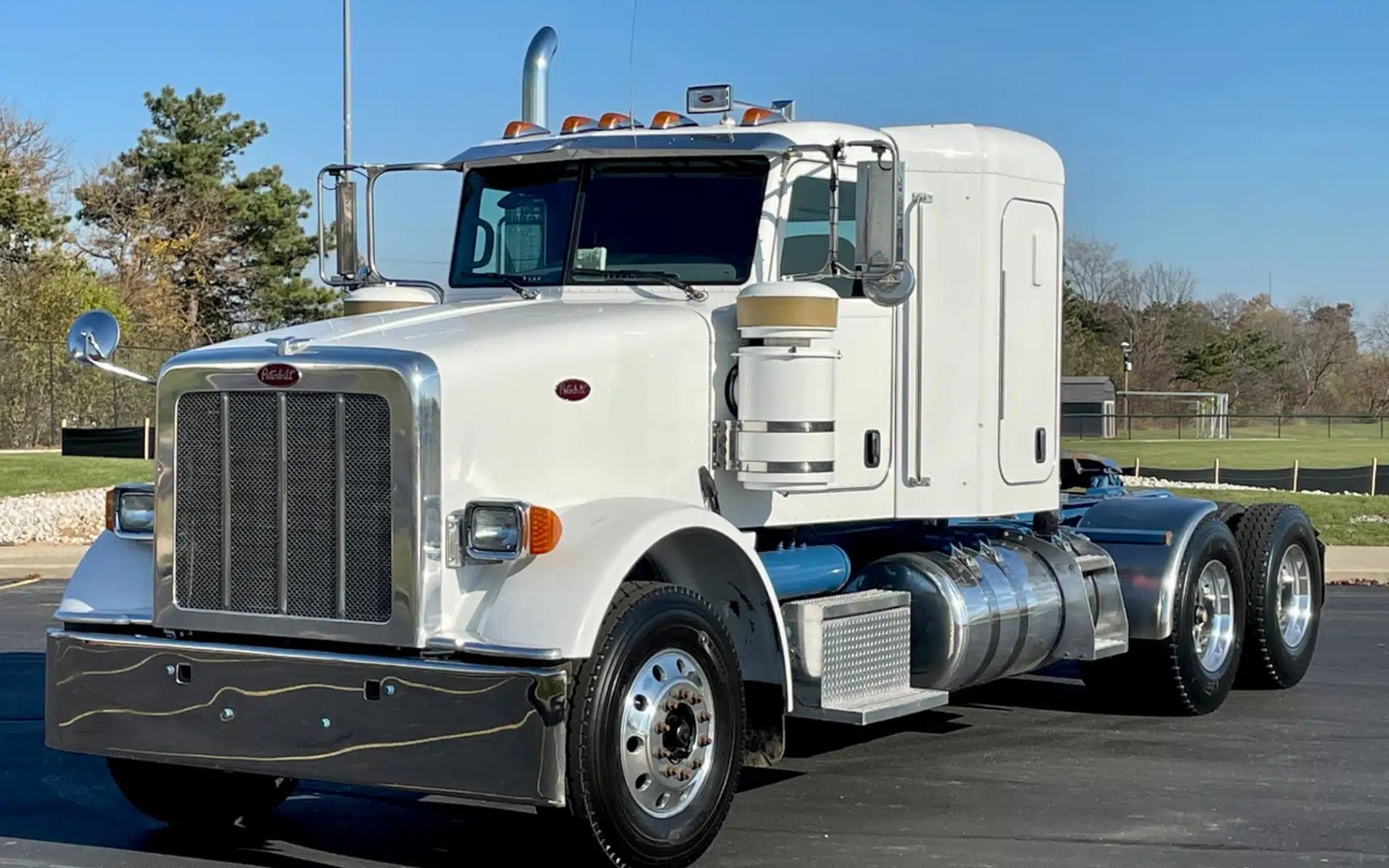
Peterbilt 367 Financing
Finance a Peterbilt 367 for oilfield winch, vacuum, water hauling, or heavy transport. Loans from $50k. B/C credit considered. Oilfield lender review after the complete file.
Oilfield operators chose the Peterbilt 367 for the same reason they chose other purpose-built severe-duty platforms: the set-forward axle configuration freed up frame space, the PACCAR powertrain options in that generation delivered pulling power with parts availability that didn't require a specialist, and the truck held together on the lease roads that would have shaken lighter conventionals apart. The 367 was Peterbilt's answer to a market that needed a vocational truck built to drilling-spread weight and access road standards, not highway economy standards.
We finance the 367 for oilfield operators across all the major producing basins. The truck stopped production in 2015 when Peterbilt consolidated the vocational lineup into the 567, which means financing is concentrated in the used and refurbished market. Our used oilfield equipment financing program handles these transactions with terms calibrated to the year, condition, and upfit configuration of the specific unit. Minimum deal size is $50,000 and we fund in about field-ticket review after a completed application.
The 367's Role in Oilfield Service
The Peterbilt 367 was built on a set-forward axle configuration that created a longer rear frame section than a set-back axle truck of similar overall length. That extra frame real estate is significant for oilfield upfit builders who need room for a vacuum body, a fluid tank, or a winch and auxiliary hydraulic system without stacking equipment over the drive axles in a way that creates stability problems under load.
In active service, the 367 appeared primarily as a vacuum truck for fluid management at well sites and saltwater disposal operations, a water transfer platform on completions jobs, a winch truck for rig assist and heavy rigging, and as a flatbed hauler for oilfield supplies and equipment moves. The PACCAR MX-13 and Cummins ISX (now X15) engines available in the 367 lineup gave operators powertrain options that fleet maintenance departments already knew how to manage.
The truck's discontinuation in 2015 created a secondary market that has stayed active in the oilfield sector. Operators who already own 367 maintenance records, have mechanics familiar with the platform, and operate in regions where parts availability is solid find that buying another 367 is a lower-risk move than transitioning to a different platform. Water hauling companies in the mid-continent run fleets with mixed 367 and newer platform trucks and manage them comfortably within a single maintenance program.
Buyers evaluating a 367 versus the newer Peterbilt 567 should weigh the purchase price discount of an older 367 against the 567's current powertrain network and extended service life. Both are financeable through our program.
What 367 Units Qualify and What We Need to Know
Used 367 financing covers units from the production years 2008 through 2015, which encompasses the modern platform. Earlier 367-based trucks exist but are evaluated on a case-by-case basis for collateral strength. The most financeable units are those with fewer than 500,000 miles, a documented engine service history, and an upfit body in operational condition.
High-mileage units are not automatically disqualified. A 367 with 600,000 miles, a zero-hour engine rebuild documented by an established truck shop, and a recently refurbished vacuum or winch body can still carry meaningful collateral value. The rebuild documentation is the key piece: without it, lenders cannot verify the engine's condition and treat the mileage at face value.
Short-form approval is available up to roughly $400,000, which covers the large majority of 367 transactions in the current used market. For deals that require a deeper review, three months of bank statements and a basic business summary are the standard supporting documents. Oilfield trucking operators with a history of equipment financing and active contracts are typically the fastest-closing applicants.
Credit Profiles We Work With
The used 367 market is heavily populated by owner-operators and small fleet operators who have experienced the cyclical credit impacts that come with oilfield service work. A slow year, a customer bankruptcy, or a down-cycle period can leave marks on a credit report that don't reflect the operator's current financial position.
Our lending network includes sources that specialize in B/C credit oilfield equipment financing. These are not subprime lenders in the consumer sense; they are commercial lenders with experience evaluating oilfield operators whose credit histories don't tell the full story. What they focus on is the current cash flow, the operational plan for the truck, and the collateral quality.
First-time buyers entering the oilfield trucking business with a 367 purchase face additional underwriting scrutiny, but not an automatic decline. A solid personal credit history, operating authority or contract in hand, and a meaningful down payment (typically 10 to 20 percent for first-time commercial borrowers) give the file a foundation to work from. Our startup equipment financing track covers these applicants specifically.
Questions before you send the file.
Straight answers about peterbilt 367 financing, documentation, timing, and equipment eligibility.
Is the Peterbilt 367 still worth financing given it is no longer in production?
Yes. The 367's discontinuation has not materially hurt its financeable value in the used market. Parts availability through the PACCAR dealer network and the strong aftermarket for Cummins and Cat powertrains common in these trucks means maintenance is manageable. The purchase price discount relative to current production trucks is often significant enough to make the economics work well.
Can I finance a 367 that needs engine work?
A 367 with known needed engine work is financed against the as-repaired value, not the as-is price. If you are buying a unit that needs a rebuild and you have quotes from a reputable shop, we can sometimes structure financing that includes the repair cost in the loan amount. This requires more documentation but is doable when the truck's post-repair value supports the total advance.
My 367 vacuum truck is already earning on a contract. Can I use that to help get approved?
A contract in place is one of the strongest supporting factors in a commercial truck financing application. If the truck is already generating day-rate revenue from a defined customer, include the contract with your application. It directly addresses the cash flow question that underwriters care about most.
Can I refinance a 367 I currently own to lower my rate?
If your current loan has a higher rate than what is available today, and you have meaningful equity in the truck, a refinance can reduce your monthly payment and save on total interest cost. We pay off the existing lender and issue a new loan. The refinance math works best when you have paid down at least 25 to 30 percent of the original principal.
I want to buy two 367 vacuum trucks at once from a fleet that is being liquidated. Can you finance both?
Multi-unit purchases from fleet liquidations are common and we handle them regularly. We can structure the two units as a single facility or as separate transactions depending on what works best for your balance sheet. Fleet liquidation purchases often come with more documentation on the trucks' service histories than private seller deals, which can speed up the process.
Quote desk
Get terms on Peterbilt 367 Financing.
Send the asset details, seller quote, and target timing. We will review the request and tell you what documentation is needed next.