

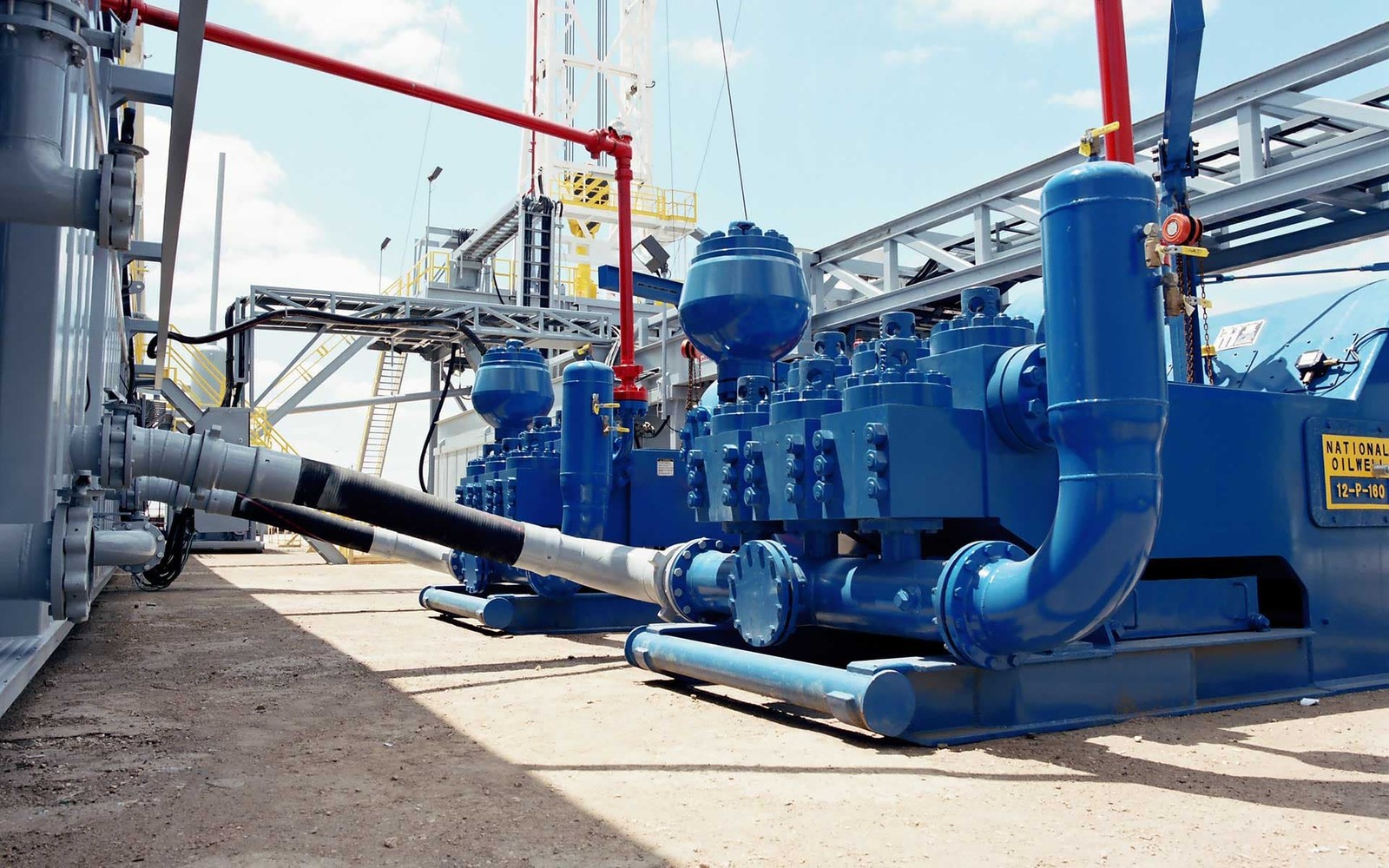
NOV 12-P-160 Triplex Mud Pump Financing
Finance new or used NOV 12-P-160 triplex mud pumps for land drilling operations. short-app funding to $400k. B/C credit considered. Closing after field-ticket review.
Triplex mud pumps move the fluid that keeps a well drilling. When a 12-P-160 is running on the rig floor, the driller has 1,600 hydraulic horsepower of continuous-duty pumping capacity handling the mud weight and flow rate the formation demands. NOV rated this pump at a maximum rod load of 160,000 pounds, which is where the model designation comes from, and the 12-inch stroke gives it excellent volumetric displacement per cycle. Drilling contractors running depth-intensive programs in the Permian Delaware or the Utica shale reach for the 12-P-160 because it handles the high-pressure, high-flow requirements of deep lateral wells without the pump struggling at the top end of its rating.
Acquiring a 12-P-160, whether new from NOV's manufacturing base or used from a stacked rig being broken down for components, requires capital in a range that most equipment lenders treat gingerly. These pumps cost several hundred thousand dollars new, and even used, field-rebuilt units trade running about $150k to $400k depending on liner size configuration, fluid end condition, and power end rebuild history. We work with specialty lenders who understand mud pump financing as a distinct asset class, not a generic equipment deal.
The 12-P-160 Pump: Power End, Fluid End, and What Drives Value
NOV builds the 12-P-160 with a forged steel power end crankshaft rated to absorb the cyclic load of three pistons firing in sequence. The main bearings are oversized to handle the rod loads at maximum rating, and the crosshead guides are designed for field liner changes without pulling the entire power end. That serviceability was a design priority for NOV because drilling contractors cannot take a pump down for a week every time a liner package needs changing.
The fluid end on the 12-P-160 uses a modular design where valve covers, valve seats, and liners are field-replaceable. Liner sizes across the standard range affect both the maximum pressure the pump can develop and the volumetric output per stroke. Smaller liners push the same rod load against less fluid cross-section, which means higher pressure capability but lower flow volume. Larger liners give more volume per stroke but at lower maximum pressure. Matching liner configuration to the well program is a decision the operator makes before putting the pump on location, and it affects how a lender thinks about the asset's utilization.
Power end condition is the primary value driver on used 12-P-160 pumps. A pump with a recently rebuilt crankshaft, new main and rod bearings, and documented inspection reports is worth substantially more than one with unknown hours and a worn crankshaft. We ask for condition documentation on used pump acquisitions because the financing team requires it for larger-ticket oilfield assets, and frankly it protects you from overpaying for a pump that needs a major rebuild before it earns a day rate.
Structuring a 12-P-160 Financing Package
NOV 12-P-160 deals run the full range of our structuring options. For a new pump purchased through NOV direct or an authorized distributor, the transaction is straightforward: we receive the purchase order or invoice, confirm delivery terms, and fund directly to the seller at closing. For used pump purchases from a rig broker, an auction, or another drilling contractor, the process requires more documentation around the asset's history, but the mechanics are the same.
Term loans on 12-P-160 pumps typically run 36 to 60 months. The pump's useful life with proper maintenance runs well past that horizon, so the amortization period reflects lender risk tolerance on this asset class more than it reflects actual obsolescence. If you already own a 12-P-160 outright or with equity, an equipment sale-leaseback puts cash in your account immediately by monetizing that equity. The pump stays on location and keeps earning while you receive the proceeds.
For drilling contractors putting together a rig package with multiple major components, we can structure a blanket deal covering the pump alongside other rig components under a single credit facility with one payment. That simplifies the accounting and sometimes improves rate by pooling collateral.
Credit and Documentation Requirements
Mud pump financing at the 12-P-160 price point typically starts the conversation with recent operating statements, your application, and the equipment details (serial number, age, condition report if used). For transactions under roughly $400,000, we have access to short-form programs that do not require tax returns on the front end, which matters for operators who need speed over precision in the early stages of a deal.
Larger transactions or blanket facilities covering multiple major rig components will require more financial documentation, typically two years of business tax returns and a current balance sheet. B and C credit profiles are accepted, though the terms will reflect the additional lender risk. We do not filter by credit score before listening to the deal. An operator with a few credit blemishes who runs a profitable spread with clear day rate visibility is a better risk than the credit score alone suggests.
- Application and basic business information
- Recent operating statements
- Equipment details and condition documentation for used pumps
- Tax returns and financials for transactions above approximately $400,000
For a fuller picture, see Volvo Construction Equipment Financing, Komatsu Financing, and Vac-Con Financing.
Questions before you send the file.
Straight answers about nov 12-p-160 triplex mud pump financing, documentation, timing, and equipment eligibility.
Can I finance a 12-P-160 that is still installed on a rig that I am purchasing as a package?
Yes. Complete rig packages that include the 12-P-160 as a major component are financeable as a single asset or as a package. We may structure the mud pump separately within the overall deal if there are lien considerations on individual components. Tell us what the full package looks like and we will work out the cleanest structure.
The pump I am looking at has a new fluid end but the power end has unknown hours from a previous operator. Does that matter?
Unknown power end history is a red flag we take seriously, and most lenders will too. At a minimum we will want a current inspection by a qualified shop that covers crankshaft runout, main bearing clearances, and crosshead condition. If the pump cannot be inspected before purchase, that affects the advance rate and may affect whether the deal gets done at all.
How does refinancing a 12-P-160 I already own affect my balance sheet?
A refinance or sale-leaseback generates cash against the pump's equity. Whether you treat the resulting obligation as debt or a lease depends on the structure and your accounting. We can work with your accountant or CFO to choose the structure that fits your balance sheet goals. The operational result is the same either way: the pump stays on location and you receive capital.
I am buying a 12-P-160 from another drilling company directly, not through a broker. Can you handle a private-party purchase?
Private-party deals are straightforward for us. We will need the seller's information, the purchase agreement or letter of intent, and the equipment details. We fund directly to the seller and take a first lien on the pump. The process is the same as any other transaction, just without a dealer in the middle.
Quote desk
Get terms on NOV 12-P-160 Triplex Mud Pump Financing.
Send the asset details, seller quote, and target timing. We will review the request and tell you what documentation is needed next.