

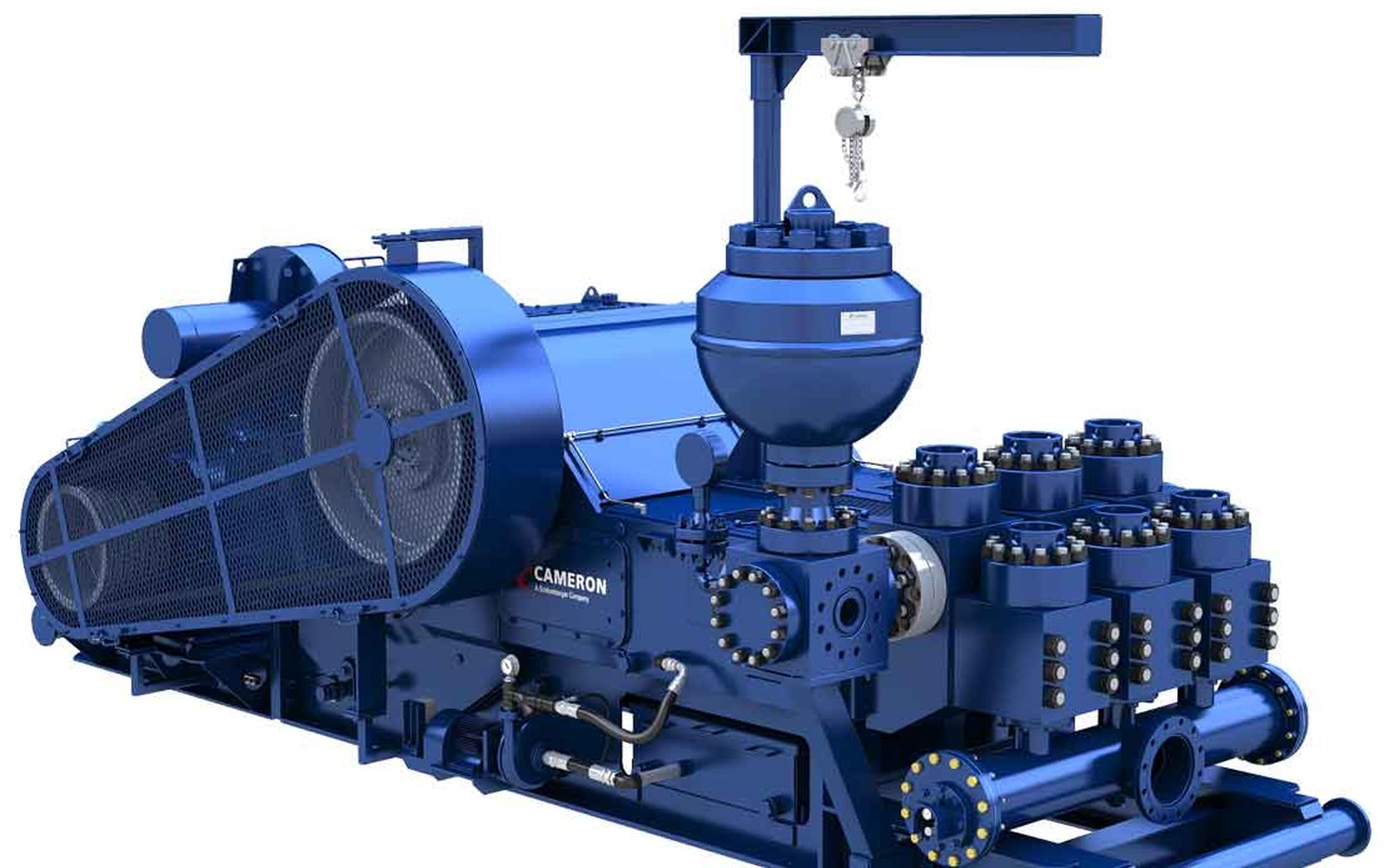
Mud Pump Financing
Finance Gardner Denver, NOV, and other triplex mud pumps for land drilling programs. Equipment loans and leases. B/C credit considered. Oilfield lender review after the complete file.
Circulation is what keeps a well alive. Without adequate pump horsepower driving drilling fluid down the string and back up the annulus, you're not drilling, you're waiting. Contractors who run a rig without a backup pump configuration are running a schedule that hinges on a single piece of iron, which is why serious horizontal programs spec two or three pumps per rig. Our mud pump financing covers triplex and duplex units, standalone pumps bought separately from a rig, and complete pump skid packages whether new or used.
Minimum transaction is $50,000. Most mud pump deals fall between $100,000 and $400,000 per unit, which puts many transactions within our short-form threshold. We work with drilling contractors across every active basin and structure deals as equipment loans, equipment leases, or refinancing on pumps already owned. B/C credit gets a real review from lenders in our panel rather than an automatic decline.
Triplex Mud Pumps: Specifications That Drive Lender Decisions
The triplex reciprocating pump has been the workhorse of land drilling mud circulation for decades. Three-cylinder configurations running at rated input horsepower deliver continuous flow with lower pulsation than duplex units, which makes them the default for modern directional and horizontal drilling programs where maintaining steady equivalent circulating density matters. Input horsepower ratings on common land-rig triplex units run from 500 HP for lighter-duty applications to 2,200 HP for deep or high-pressure programs.
Major OEMs include Gardner Denver, NOV, and SPM. The Gardner Denver PZ-11 triplex is one of the most widely deployed units in the US land market, rated at 1,100 input HP with a 7,500 PSI maximum operating pressure at common liner configurations. NOV's 12-P-160 and 14-P-220 series have also established large secondary market bases. Lenders look at rated HP, liner size and pressure rating, the condition of fluid end components, and OEM parts availability when establishing collateral value. A pump with a documented fluid end rebuild on a known-brand frame is meaningfully different from an unknown-pedigree unit with worn liners.
- Triplex units: 500 HP to 2,200 HP input, most common in horizontal drilling
- Duplex units: lower HP, slower speeds, more common in vertical and workover applications
- Fluid end condition: liners, pistons, valves, and seats are wear components that affect value
- Power end condition: crankshaft, crossheads, and main bearings are the structural core
New Pumps, Used Pumps, and Remanufactured Units
New triplex mud pumps from major OEMs carry OEM warranties and full documentation, which makes lender underwriting straightforward. The capital cost is higher, but the financing terms tend to reflect the cleaner collateral position. Used pumps are where most independent contractors find their value, particularly Gardner Denver and NOV units with established parts networks. A used pump with documented rebuild history and a recent fluid end inspection can finance at terms close to new, because the secondary market for quality used triplex pumps is active and liquid.
Remanufactured units, which combine a rebuilt power end with a new or rebuilt fluid end and controls package, often offer the best combination of reliability and capital efficiency. Several remanufacturers in Texas, Oklahoma, and Louisiana specialize in this segment, and we have financed remanufactured pumps from dealers in Odessa, TX and Oklahoma City, OK. The key for financing is provenance: a remanufactured pump with documented work from a known shop is a different underwriting conversation than an unknown unit with a fresh coat of paint.
Financing the Full Mud System
A mud pump is one component of a complete circulating system. Solids control equipment (shale shakers, desanders, desilters, centrifuges), mixing equipment, and pit volume totalizators all require capital if they're being acquired separately from the rig. We can structure financing for individual components or bundle related mud system equipment into a single facility when that simplifies the transaction. If you're also looking at drilling rig financing for the primary unit, ask about bundling the pump into the same deal.
For contractors running multiple rigs who carry spare pump inventory, a Equipment Sale-Leaseback on existing pumps is one way to free capital without selling working equipment. We put a value on what you already own and advance cash against that value, with a leaseback structure that lets you keep operating the pumps while the funds go to work elsewhere in the business.
Getting a Mud Pump Deal Funded
Deals under $400,000 on mud pumps with clean title and a current inspection report can often receive credit decisions within 24 to 48 hours on an short-form basis. Full-documentation deals on larger pump packages typically close within one to two weeks. The process starts with a one-page credit application and a purchase agreement or appraisal. If you're buying through a dealer, we coordinate the payoff directly with the seller. If you're buying privately from another contractor, our private-party equipment financing program handles the structure.
Common delays in mud pump deals come from title complications on used equipment (particularly pumps that have changed hands multiple times in the secondary market), missing inspection reports on the fluid end, and unclear ownership history. We'll flag those issues early in the process so you can address them before they become closing delays.
Questions before you send the file.
Straight answers about mud pump financing, documentation, timing, and equipment eligibility.
Can I finance just the fluid end components rather than the entire pump?
Fluid end components by themselves (liners, pistons, valves) are generally too small individually to qualify as equipment financing, which typically requires a minimum of $50,000 and collateral that stands on its own as a capital asset. If you're doing a complete fluid end rebuild on a frame you own, a working capital loan may be a better fit than equipment financing. If the fluid end replacement is part of a remanufacture that produces a complete, lendable unit, that's a different conversation.
Do I need to own the rig to finance a mud pump separately?
No. Mud pumps are financed as standalone assets routinely. The pump carries its own collateral value regardless of whether it's paired with a specific rig. Contractors who keep spare pump inventory or who are building out a rental fleet commonly finance pumps independently of any rig deal.
Can I refinance a mud pump that I bought outright last year to free up cash?
Yes. A cash-out refinance on a pump you own free and clear works the same way as any other equipment refinance: we put a lien on the pump and send you the proceeds up to the lender's advance rate on appraised value. This is a useful capital source when operating cash is tight and you'd rather not take on unsecured debt.
What if the pump I'm buying is in another state?
Multi-state transactions are common in the oilfield equipment market. The physical location of the equipment during the sale doesn't create a problem for financing. We handle the lien filing in the appropriate jurisdiction and work with the seller wherever the equipment is located.
Are pump rental companies able to finance mud pump inventory?
Yes. Oilfield rental companies building pump inventory to put on day-rate to contractors are a common borrower type in our panel. The underwriting looks at the rental company's financials, its existing customer base, and the utilization rate on current inventory. Having existing rental contracts or a proven rental track record strengthens the application.
Quote desk
Get terms on Mud Pump Financing.
Send the asset details, seller quote, and target timing. We will review the request and tell you what documentation is needed next.