

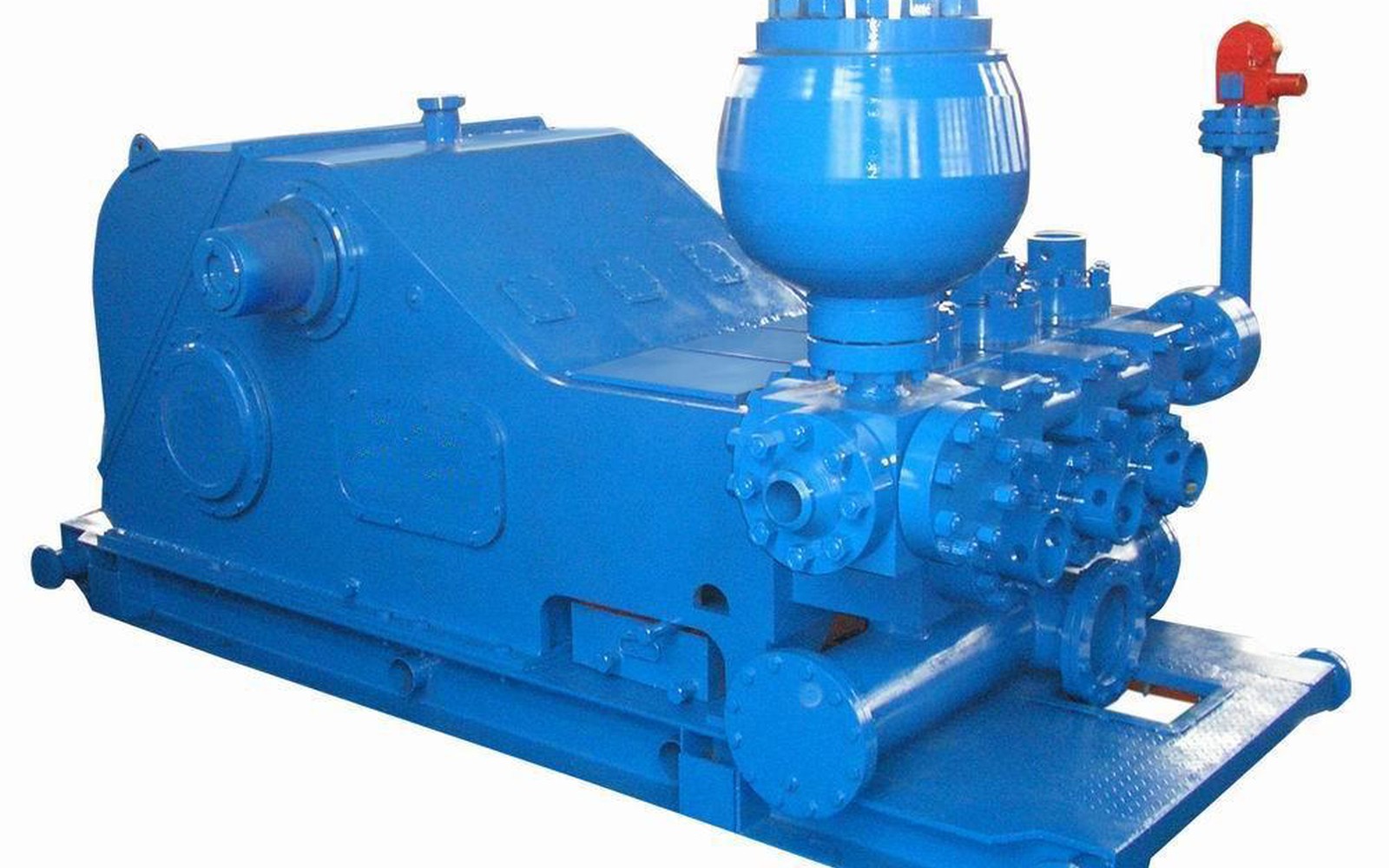
NOV 14-P-220 Triplex Mud Pump Financing
Finance new or used NOV 14-P-220 triplex mud pumps for high-horsepower drilling programs. Up to $400k short-form. B/C credit considered. Oilfield lender review after the complete file.
Push a deep horizontal well in the Delaware Basin or the Powder River Basin and the mud program demands equipment sized for the job. The NOV 14-P-220 is a 2,200 hydraulic horsepower triplex pump with a 14-inch stroke and a maximum rod load of 220,000 pounds. That rod load capacity puts the 14-P-220 at the top of the land drilling pump class, and deep-well contractors in Winkler County, Lea County, and the Wattenberg Field have standardized on it for programs that require sustained high-pressure circulation to total depth without throttling the pump back to protect the power end. If a rig is spec'd for wells past 15,000 feet, the conversation usually starts with whether it has one 14-P-220 or two.
Financing a 14-P-220 is a significant capital event. New units from NOV carry acquisition costs that can approach or exceed half a million dollars, and premium rebuilt units still command major dollars in the secondary market. We structure oilfield equipment loans and lease arrangements specifically for this tier of asset, and we work with lenders who have funded enough large-displacement drilling pumps to understand what drives value in this market, including the relative importance of power end rebuild history versus fluid end condition.
Engineering Details That Matter for Financing the 14-P-220
The 14-inch stroke of the 14-P-220 is substantially longer than the 12-inch stroke on the smaller 12-P-160, and that extra stroke length is what enables the higher volumetric output per revolution. At full rating, the 14-P-220 running at its design speed can circulate the mud volumes deep directional wells require to maintain hole cleaning across extended lateral sections. The difference matters in the Permian Basin's Bone Spring and Wolfcamp formations, where laterals routinely extend past 10,000 feet, and in the Williston Basin's Bakken Three Forks program where mud weight management is critical across the lateral.
Power end longevity on the 14-P-220 hinges on crankshaft condition, main bearing clearances, and crosshead alignment. NOV designed the power end for extended service life under continuous duty, and properly maintained units accumulate many thousands of operating hours before requiring major rebuild. The fluid end, by contrast, is a wear item by design. Valve seats, liners, and piston assemblies cycle out on a schedule tied to the abrasiveness of the mud, the pressure cycles per hour, and the liner size in use. That distinction between power end (capital asset) and fluid end (consumable component) shapes how we structure collateral around a 14-P-220.
For lenders evaluating a used 14-P-220, the crankshaft inspection report is the single most important document. A pump with a crankshaft in known good condition and recent main bearing replacement is a different credit than one with deferred maintenance history. We facilitate independent inspections when necessary to establish value confidence for the lender.
Buying New vs. the Secondary Market
New 14-P-220 pumps purchased through NOV come with warranty support and documented zero-hours condition. Lead times from NOV can run several months depending on backlog, so operators who need capacity fast often look at the used market first. Used 14-P-220 pumps come from three primary sources: rig liquidations where a package is being broken down and sold in components, brokered deals where another contractor is reducing capacity, and occasional rental company liquidations.
Condition on secondary market 14-P-220 pumps ranges from excellent to buyer-beware. The best units have a complete service history, recent power end inspection, and known liner and fluid end hours. The worst have unknown run time and signs of deferred maintenance. We can help you think through the documentation package before you commit to a purchase, because the financing structure depends partly on what documentation you can provide.
Rebuilt units that have gone through a certified NOV service center or a reputable independent mud pump rebuild shop occupy a middle ground: they may not have NOV warranty, but a documented rebuild with certified parts and a final inspection report gives lenders a reasonable basis for funding. Operators comparing the NOV 12-P-160 against the 14-P-220 for a specific program should factor in not just acquisition cost but the operational cost difference across their expected well depth and pressure profile.
Timeline from Application to Funded
Our target is to get from completed application to funded in about one to two weeks for standard transactions. Large-ticket mud pump deals sometimes require additional due diligence time, particularly if an inspection needs to be ordered on a used unit or if the seller is a bankruptcy estate or rig broker with a complex title chain. We will be direct about timelines once we understand the deal specifics.
For operators with a time-sensitive purchase, we can often issue a preliminary credit decision within two to three business days of receiving a complete application package. That gets you a commitment letter you can use with the seller to hold the pump while the full documentation package closes.
The application process starts with basic business information and the equipment details. Three months of bank statements support the business cash flow picture. For deals above roughly $400,000, we move into full financial documentation including tax returns. Below that threshold, our short-form oilfield financing path keeps the process lean. Pressure pumping companies and drilling contractors financing multiple components simultaneously can often consolidate into a single underwriting review rather than running separate applications on each piece of equipment.
Owners frequently line this up against Ariel Compressor Financing, Waukesha Engine Financing, and Kenworth Financing.
Questions before you send the file.
Straight answers about nov 14-p-220 triplex mud pump financing, documentation, timing, and equipment eligibility.
Is the 14-P-220 considered too specialized for most equipment lenders?
General equipment lenders without oilfield experience often pass on large drilling pump deals because they do not have a clear handle on collateral value or secondary market depth. We work with lenders who actively fund this asset class, so the specialized nature of the equipment is not the barrier it would be with a bank that lends on machine tools or construction equipment.
Can I finance two 14-P-220 pumps as a single deal for a new rig build?
Multiple pump deals on a single rig build are handled as a package. We may structure it as a single credit facility with consolidated collateral or as parallel deals depending on the lender appetite at the transaction size. Two premium 14-P-220 pumps can represent a significant credit, and we may need full financial documentation for that size commitment regardless of the application-only threshold.
The pump I want is located in Alberta and I am a US operator. Can you handle a cross-border acquisition?
Cross-border equipment purchases add complexity around customs, title, and import documentation. We have funded cross-border deals before, but the process takes longer and requires coordination with customs brokers and legal counsel on both sides. If you have a specific pump in Canada you want to fund, describe the situation and we will tell you honestly what is workable.
How do lenders value a 14-P-220 that has been sitting in open storage for two years?
Stacked time in open storage can accelerate corrosion on valve bodies, fluid end bores, and power end exposed surfaces. Lenders will discount the value accordingly unless the pump has been properly preserved and sealed during storage. A current inspection that assesses storage condition is essential before we can quote terms on a unit that has been stacked.
Can I use a 14-P-220 purchase to unlock Section 179 or bonus depreciation in the same year?
Section 179 and bonus depreciation treatment depends on whether the deal is structured as a loan (where you own the asset) or a lease. A term loan with standard title transfer qualifies for immediate expensing under current rules. A true lease does not. Your accountant should confirm your eligibility based on your specific situation, but we can structure the deal to support your tax objective.
Quote desk
Get terms on NOV 14-P-220 Triplex Mud Pump Financing.
Send the asset details, seller quote, and target timing. We will review the request and tell you what documentation is needed next.