

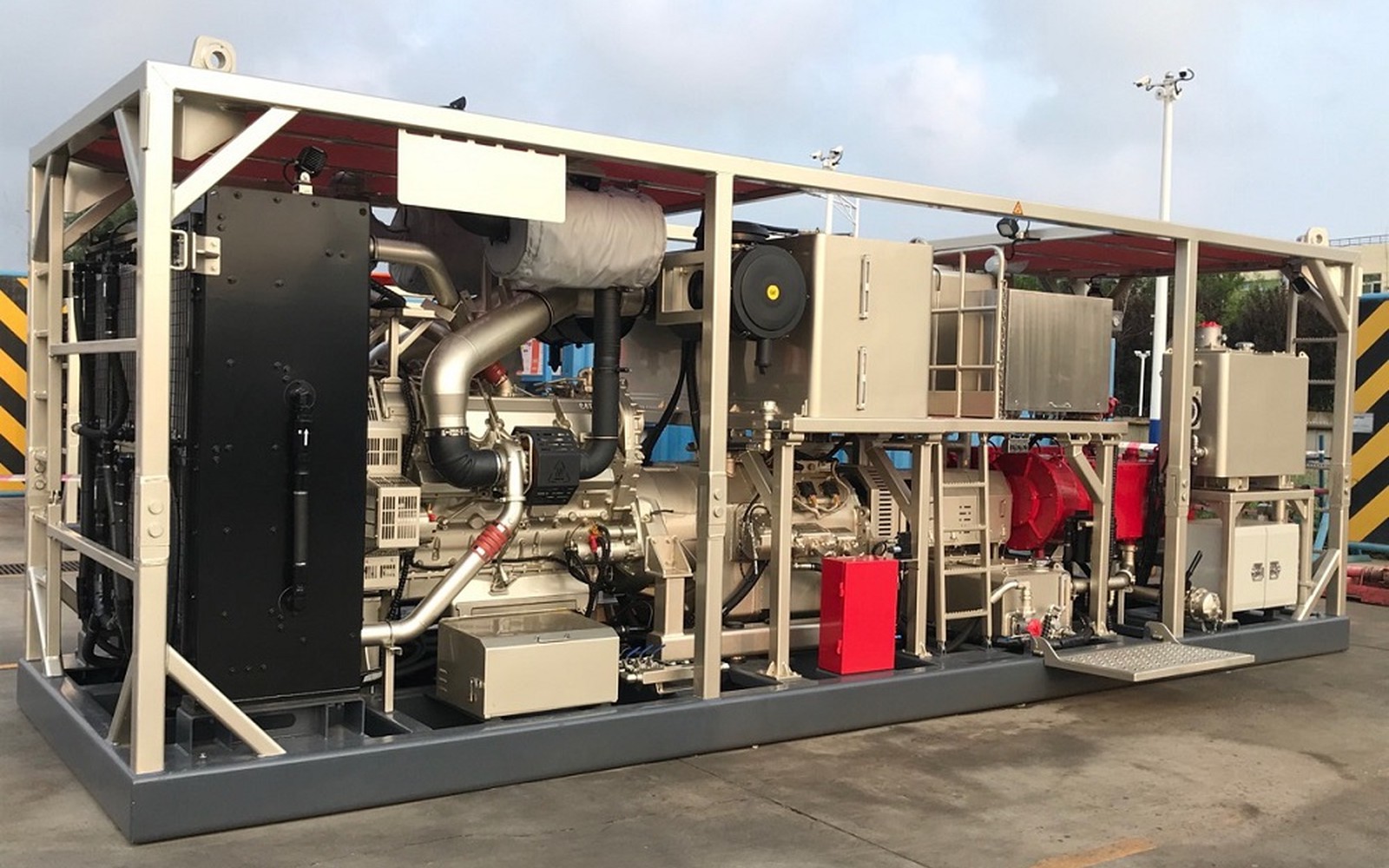
Hydraulic Fracturing Equipment Financing
Finance hydraulic fracturing equipment including pumps, blenders, hydration units, iron manifolds, and data systems. Loans, leases, and sale-leaseback for frac.
Hydraulic fracturing is the most capital-intensive service operation in the oilfield, and the companies that do it well have figured out how to manage that capital without letting the equipment cost outpace the revenue it generates. A full Tier 4 pump, blender, and hydration configuration represents millions in deployed iron per spread, and the financing structure behind that iron matters to whether the business actually works at realistic utilization rates.
We finance the full range of hydraulic fracturing equipment: pump trucks, blender units, hydration units, chemical additive systems, data vans, missile manifolds, and the auxiliary iron that keeps a spread running. Our work covers new equipment purchases from OEM integrators, used fleet acquisitions from pressure pumping companies restructuring or exiting basins, and refinancing of existing hydraulic fracturing equipment where the capital structure needs adjustment. We structure deals for frac companies large and small, and the deal size range is broad, starting at $50,000 for ancillary equipment and reaching into eight figures for complete spread financing.
Hydraulic Fracturing Equipment Categories and Financing Considerations
The high-pressure pumping equipment is the core of any frac spread, but the supporting equipment categories each carry their own financing characteristics. Blender units mix proppant (sand or ceramic) with water and chemistry to produce the slurry that the pump trucks inject into the wellbore. A modern twin-screw blender with automated bulk augers and a hydration tub represents $500,000 to $1.5 million in equipment depending on configuration and age. Hydration units, which condition source water with additives before it reaches the blender, are typically lower in value but integral to the spread operation. Chemical additive systems (CAS) mix friction reducer, biocide, scale inhibitor, and other chemistry into the treating stream and are frequently the most technologically complex component on the location.
Data vans and real-time monitoring systems represent a different type of collateral. A modern data van with surface instrumentation, downhole gauge systems integration, and real-time rate and pressure monitoring has meaningful value but is a technology asset with a different depreciation curve than a pump engine. Lenders who work frac deals understand that the data van is a necessary part of the spread but doesn't depreciate the same way as a steel pump truck.
- Blender units: twin-screw blenders with bulk auger systems are the current Permian Basin standard
- Chemical additive systems: multi-line automated CAS units are common on modern pad-drilling completions
- Manifolds and iron: high-pressure treating iron (2-inch and 3-inch treating lines, missiles) has secondary market value
- Data systems: surface instrumentation and SCADA integration is standard on active spread deployments
Structuring Hydraulic Fracturing Equipment Financing
The deal structure for hydraulic fracturing equipment depends heavily on whether the purchase is a single unit, a partial spread, or a complete spread acquisition. Single-unit deals for a blender or hydration unit running about $300k to $800k often move on short-form oilfield financing, particularly when the business has a track record of frac revenue and the credit profile is reasonable. These deals can close in under two weeks.
Complete spread acquisitions require full financial documentation and typically a multi-lender structure or a single senior lender with appetite for large oilfield transactions. The underwriting process involves an independent appraisal of the spread, a detailed equipment schedule with serial numbers and hours, and financial statements that reflect the business's revenue against its existing debt obligations. We work with lenders across the credit spectrum, which means a company with a challenging credit profile but a solid spread and an operator contract can still find paper through our platform even if a conventional bank has passed.
For companies looking to keep equipment on the books while generating liquidity, an equipment sale-leaseback on existing hydraulic fracturing equipment can release capital while the equipment stays operational. Sale-leaseback on a spread that is actively generating frac revenue is a strong structure because the lender sees cash flow against deployed iron, not speculative utilization. Operators working the Permian from Midland, TX and Odessa, TX have used this structure to fund pad-drilling expansions without pausing operations.
The Basin Context for Frac Equipment Capital Decisions
Hydraulic fracturing equipment demand tracks basin activity, and basin activity varies by crude price, E&P operator capital budgets, and the stage count intensity of the completion designs operators are running. The Permian Basin has been the dominant frac market for years and continues to consume the most horsepower of any basin in North America. The DJ Basin in Colorado (active near Greeley, CO), the Haynesville in Louisiana and East Texas, and the Marcellus and Utica in the Appalachian region all maintain active frac demand with different seasonal and pricing patterns.
A pressure pumping company making a capital investment in hydraulic fracturing equipment needs to assess not just whether it can field a competitive spread, but whether the basin it's targeting has enough operator activity to provide the utilization that makes the payment work. We don't underwrite the basin for you, but we do structure deals with an understanding of how oilfield revenue actually arrives versus how a loan payment schedule is set up. Companies that maintain contracts with multiple E&P operators across more than one basin have the most financing flexibility, because the revenue profile is less dependent on a single operator or a single area's activity level.
Questions before you send the file.
Straight answers about hydraulic fracturing equipment financing, documentation, timing, and equipment eligibility.
Can a pressure pumping company with only one or two existing pumps get financing to add blender and hydration equipment to build out a full spread?
Yes. Financing ancillary spread components for a company expanding from partial to full-spread capability is a transaction we handle. The key is demonstrating that the company has or has committed to enough pump horsepower to make the spread functional, along with the operating experience to run it. Lenders who work frac deals understand that spreads are built incrementally and will evaluate the expansion plan on its merits.
We operate used Tier 2 equipment. Is Tier 2 frac equipment still financeable?
Tier 2 equipment is still financeable, but the financing landscape is narrower than for Tier 4 iron. Some oilfield lenders have reduced advance rates on Tier 2 equipment to reflect weaker secondary market demand and increasing operator preference for lower-emission spreads. Tier 2 deals need stronger down payments and may carry shorter terms. The equipment still works, still earns revenue on Tier 2-permitted pad sites, and we can find paper for it, but you should expect tighter terms than on a Tier 4 spread.
How do lenders think about the missile manifolds and high-pressure iron as collateral?
High-pressure treating iron (missiles, treating line, connectors, and iron) carries secondary market value but is viewed by most lenders as ancillary collateral rather than primary. The pump trucks and blender are the core collateral. Including treating iron in the financing package usually increases the total deal size without proportionally increasing the advance on the iron alone. Some lenders will finance the iron as part of a complete spread deal but won't take it as standalone collateral.
Can we structure a frac equipment deal that includes both new and used components?
Yes. Mixed-age spread financing is common because most operators assemble spreads from multiple sources. The financing facility covers the complete equipment schedule, with the advance rate on each component reflecting its age and condition. New pump trucks and an older blender can coexist in the same deal. The documentation requirement is clear title and serial-number-level description of each component, regardless of whether it's new or used.
Is there a way to structure hydraulic fracturing equipment financing to align with our seasonal utilization patterns?
Seasonal payment structures are available through some lenders in our panel who work oilfield and infrastructure deals. A step-down or step-up payment schedule, or a deal with allowed skip payments during predictable slow seasons, can be negotiated on the right transaction. This structure is more common on larger deals with full financial documentation. Application-only deals typically use fixed monthly payments. If seasonal flexibility matters to your business, tell us that upfront so we can match you to the right lenders.
Quote desk
Get terms on Hydraulic Fracturing Equipment Financing.
Send the asset details, seller quote, and target timing. We will review the request and tell you what documentation is needed next.