

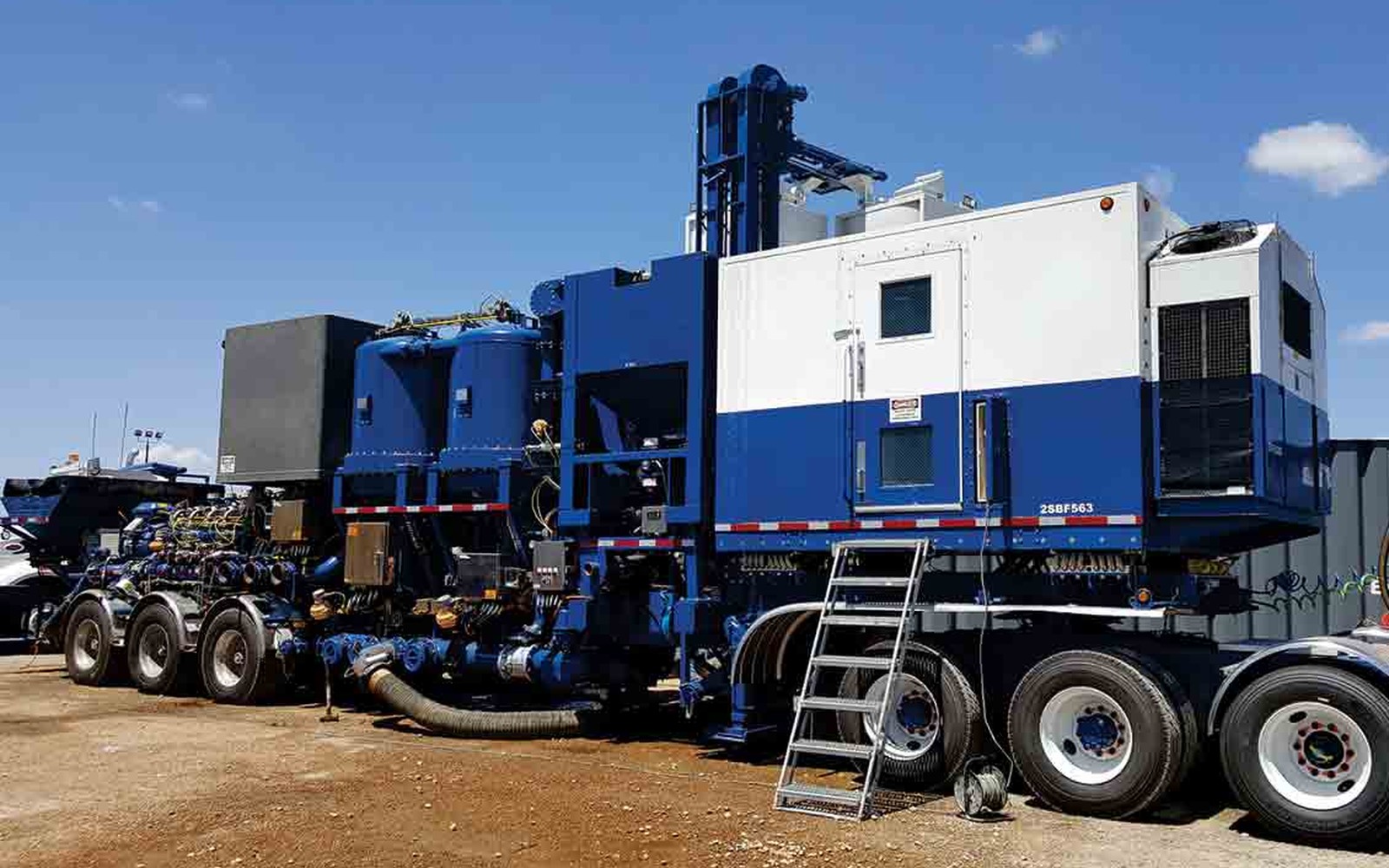
Frac Blender Financing
Finance frac blenders and blending units for hydraulic fracturing operations. Loans, leases, and sale-leaseback for new and used blender equipment. Oilfield lender review after the complete file.
The blender is the mixing heart of a frac spread. Everything the pump trucks push into the wellbore passes through the blender first, and the quality and consistency of that slurry determines how the stage performs. A blender that trips out during a stage costs the service company money, frustrates the operator, and sometimes damages the tubulars. The companies that run reliable, well-maintained blending equipment hold their contracts and earn callbacks; the ones running worn or underpowered units lose work to competitors who can deliver consistent proppant concentrations stage after stage.
Frac blender financing covers twin-screw blenders with automated bulk auger systems, older paddle-type blenders still in use in some basins, and complete blender packages that include bulk transport augers, hydration tubs, and the associated controls. Deals start at $50,000 for older blender acquisitions and run to several million for new automated systems. We work with hydraulic fracturing companies and standalone blender operators who subcontract to larger spreads, and our lender panel includes sources who have actually funded blending equipment before.
Blender Equipment: What Lenders Evaluate
Twin-screw blenders represent the current baseline for most active Permian Basin operations. The twin-screw design moves proppant at higher rates and with better slurry consistency than the older paddle designs, which is why operators running high-concentration completions have pushed service companies toward the newer technology. A modern twin-screw blender unit with two 300-400 HP drive systems, automated auger controls, and a hydration tub integration runs significantly higher in value than a basic paddle blender from the same year.
Key variables lenders evaluate on a blender: the drive system (engine or electric motor, HP rating), the auger configuration (single versus dual auger, capacity in tons per minute), the control system (manual versus automated proppant concentration control), and the integration with hydration. A blender with modern automated controls and a clean maintenance history will carry a meaningfully higher advance rate than one with manual controls and undocumented service history. The blender tub and mixing chamber also face wear from abrasive proppant, and lenders who work this equipment factor liner condition into the collateral picture.
- Twin-screw drive systems: typically 300-400 HP per screw on current-generation units
- Auger throughput capacity in tons per minute is a primary specification
- Hydration tub integration determines whether the unit can handle water-based fluid conditioning on location
- Tub liner and auger flights face abrasive wear from proppant; condition affects residual value
Financing Terms for Blender Units
A used blender in good working condition with documented service history typically finances on a three-to-five-year term. New units may support terms up to seven years depending on the lender and the borrower's overall credit profile. Down payment requirements range from 10 to 15 percent for clean credit deals to 20 to 30 percent for B/C credit situations. The advance rate against the unit depends on how clearly the lender can establish secondary market value, which comes back to documentation: a blender with a recent independent inspection report, a documented maintenance log, and a clear title history will carry a better advance rate than one with gaps in any of those areas.
Monthly payments should fit inside the revenue the blender generates in realistic utilization. A blender that operates 15 to 20 days per month at a day rate appropriate to its capability and condition generates enough revenue to support a well-structured financing payment without straining the business. If the utilization assumption in your business plan requires the blender to run 28 days a month at peak day rate to cover the note, that assumption needs scrutiny before the deal closes. We work with lenders who model this honestly, not ones who approve a deal that works only on paper. Equipment leasing structures can sometimes provide lower monthly payments than a loan if operating lease treatment fits your tax and balance sheet situation.
Blender Operators Who Use This Financing
The most common borrower profile is a pressure pumping company that owns its pump trucks but has been renting blending equipment from third parties and wants to bring that cost in-house. Owning the blender eliminates a daily rental expense and gives the company more operational control on location. The capital outlay for a used blender in good condition is often recovered within a year or two of replacing rental costs, which makes the business case clear.
A second profile is the independent blender contractor who provides blending services to multiple frac companies on a subcontract basis. These operators often run one or two blenders and move between spreads as needed. They have day-rate revenue from their blending services but operate with lean capital structures. Short-form financing up to $400,000 works well for this profile because it doesn't require the level of financial documentation that a bank would expect. Operators based in Carlsbad, NM and Greeley, CO have used this path to acquire blending equipment without the documentation burden of a full underwritten deal. The third profile is the pressure pumping company adding a second blender to provide redundancy on multi-well pad programs where a single-point blender failure would shut down the entire completion program.
Questions before you send the file.
Straight answers about frac blender financing, documentation, timing, and equipment eligibility.
Can I finance a blender unit that I'm buying from a pressure pumping company that is liquidating its assets?
Yes. Distressed-seller acquisitions are a normal part of the used oilfield equipment market. The key requirements are clear title from the selling entity (or a lien payoff structured into the purchase), a bill of sale with accurate equipment description, and a condition assessment that gives the lender a basis for the advance rate. If the seller is in bankruptcy, the purchase may need to go through a bankruptcy court auction process, which adds steps but doesn't make the financing impossible.
We run a paddle-type blender and need financing to upgrade to a twin-screw unit. Can we use our existing blender as a trade-in or part of the deal?
A trade-in can sometimes be incorporated by selling your existing blender to a dealer or third party and using the proceeds as part of the down payment on the new unit. Lenders typically won't structure a dealer-type trade-in directly, but the economic result is similar. If your current paddle blender still has a note on it, the payoff comes out of the sale proceeds and the remainder becomes your equity contribution.
How do lenders treat the hydration tub that's mounted on the blender frame?
A hydration tub that is permanently integrated into the blender frame is typically treated as part of the blender collateral and included in the overall equipment value. A standalone hydration unit that is a separate piece of equipment needs its own title documentation and is evaluated separately, even if it always operates with the blender. Tell us how your equipment is titled and configured and we'll structure the documentation accordingly.
Is financing available for electric-drive blender units that don't have a diesel engine?
Electric-drive blender units are financeable, but the lender needs to understand the power source arrangement. An electric blender that draws from a turbine-powered generator or a grid connection is still a viable collateral asset, but the lender will want to understand whether the drive system is captive to a specific spread configuration or if it can be redeployed independently. Units that can operate with a diesel generator backup have stronger secondary market flexibility.
Can I refinance a blender I purchased two years ago if I need to pull out some equity?
A cash-out refinance on a blender you own with significant equity is available. We'll need the current market value of the unit, the existing payoff (if any), and your financial profile. If the unit's market value exceeds what you owe on it, or if you own it free and clear, a cash-out deal can release capital for other uses without requiring you to sell the equipment.
Quote desk
Get terms on Frac Blender Financing.
Send the asset details, seller quote, and target timing. We will review the request and tell you what documentation is needed next.