

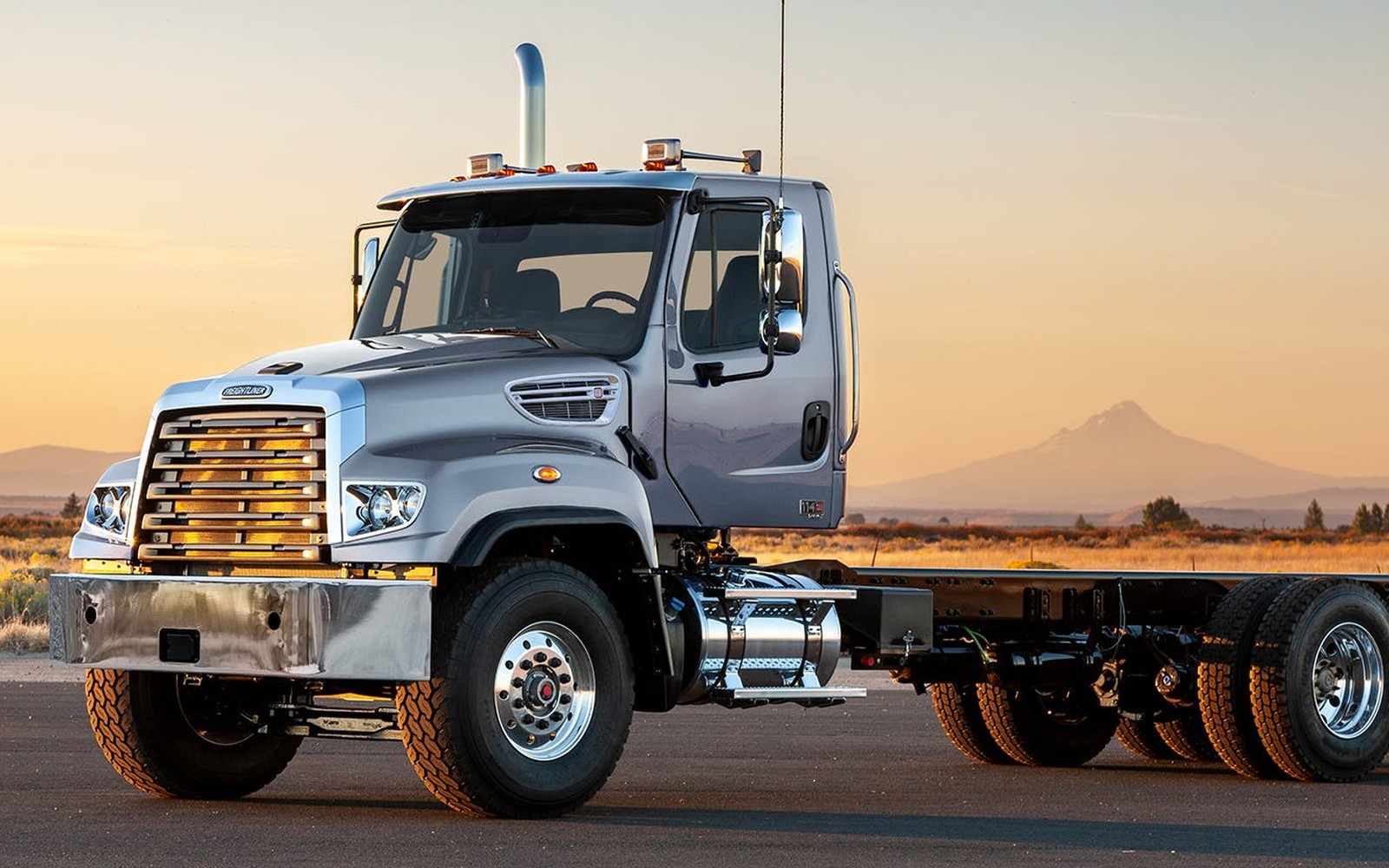
Freightliner 114SD Financing
Finance a Freightliner 114SD for oilfield, vacuum, or heavy vocational service. short-app funding to $400k, B/C credit considered, 1-2 week funding. Get a.
Utilization is the number that matters in oilfield service trucking, and the Freightliner 114SD earns high utilization ratings because operators keep running it. The 114SD is a severe-duty vocational platform built on a fully boxed rail frame with a set-forward front axle configuration that improves maneuverability on tight lease roads and well pads while maintaining the front-axle weight ratings that vocational bodies demand. Daimler introduced the 114SD alongside the 122SD to give operators a medium-width cab option for work in congested or space-constrained environments; the 114 trades some cab width for better sight lines in tanker, vacuum, and flat-deck applications where the driver needs to position precisely. Financing one does not have to be the slow part of the acquisition. We fund 114SD transactions from $50,000 through $400,000 on an short-form basis, with decisions typically arriving in days, not weeks.
The 114SD has carved out a strong position in the oilfield vacuum truck market. Operators running produced water hauling, pit cleaning, and spill response commonly choose the 114SD platform for its Allison transmission compatibility, its PTO provisions, and its ability to accept heavy vacuum body upfits without exceeding the front axle weight limits that govern operations on state highways. Those are the specific operational realities we understand when we look at an 114SD deal, and that context shapes how we present the transaction to lenders.
Who Buys and Finances the 114SD
The buyers we finance most often on the 114SD fall into distinct categories. Oilfield trucking companies adding a vacuum or flat-deck unit to an active fleet represent the largest share. They produce three months of bank statements, demonstrate consistent revenue, and fund quickly with minimal friction. Next are operators who run a single unit for a specific operator under a term work order or day-rate arrangement. Their revenue is concentrated in one account, which creates bank-credit risk, but the work order itself is collateral context we use to strengthen the file. Finally there are contractors who need the 114SD for non-road applications, such as pit remediation or liquid waste transport, where the truck never operates on a public highway and may be titled accordingly. Those situations carry their own documentation requirements and we walk buyers through them directly.
We also see significant 114SD demand from saltwater disposal operators who need a truck platform capable of accepting a custom tanker body designed for produced water with elevated chloride content. The 114SD's stainless-compatible framing options make it a natural platform for those builds, and the collateral value holds even on specialty configurations when the body work is documented and traceable.
Pricing, Terms, and What to Expect
A used 114SD from the 2017-2022 model years in oilfield-ready condition typically runs from the mid-$80,000s to the mid-$130,000s depending on mileage, body configuration, and region. New or current-model examples will sit considerably higher, particularly for specialized configurations. Terms on deals in our range generally run from 36 to 84 months. Shorter terms produce higher monthly payments but lower total interest cost; longer terms reduce the monthly obligation and preserve cash flow for operations. We present both so you can model the cash flow impact before committing.
Down payment requirements vary by credit profile. Well-qualified buyers with clean credit and strong cash flow may fund with ten to fifteen percent down. B/C credit transactions typically require twenty to thirty percent down, sometimes more on older or higher-mileage units. For buyers who want to minimize cash out of pocket, a dollar-buyout lease preserves slightly more working capital in some structures while delivering the same end-of-term ownership outcome. We discuss the tradeoffs specific to the 114SD and the buyer's tax situation before recommending one structure over another.
Operators who want to explore equipment refinancing on a 114SD they already own can often pull capital out of a paid-down or fully owned unit without disrupting day-to-day operations. We see that most often when operators want to fund a second truck purchase or cover a large maintenance expense without taking on an unsecured line of credit.
114SD in the Current Oilfield Market
Vacuum truck demand in the major producing basins tends to track closely with completion activity, specifically the water volumes that horizontal wells generate during flowback and during long-term produced water management. The Permian Basin in particular has driven high demand for vacuum and tanker-platform trucks as operators manage produced water volumes that, in some areas, exceed oil production volumes by a significant ratio. The 114SD has been a primary beneficiary of that trend, and resale values in West Texas and southeastern New Mexico markets have remained firm as a result. Operators in Hobbs and the surrounding Delaware Basin area have been active buyers of 114SD platforms for that reason.
The Detroit Diesel DD13 and DD15 powertrains that appear in many 114SD configurations are well-supported in oilfield service areas, with dealer and independent service coverage across every major basin. That serviceability factor matters for lender comfort on used units and for operators who need to keep downtime minimal on high-utilization routes. We also finance the Detroit Diesel DD15 engine as a standalone or in-vehicle asset when operators need to address powertrain capital outside of a full-truck transaction.
Start Your 114SD Financing Application
Share the unit details and we respond with financing options the same business day on most files. New, used, and upfitted configurations all qualify. B/C credit situations reviewed personally, not by algorithm.
Questions before you send the file.
Straight answers about freightliner 114sd financing, documentation, timing, and equipment eligibility.
Can I finance a 114SD with an existing vacuum body upfit that was not done by the original manufacturer?
Yes. Aftermarket body upfits from established fabricators carry collateral value as long as the work is documented. We look at the total unit value, not just the cab-and-chassis. Provide us with the body manufacturer name and installation date if you have it, and we factor that into our lender presentation.
The truck I am looking at has a lien from a previous owner that has not been released. Can we still close?
We can proceed as long as the existing lien can be satisfied and released as part of the closing process. In most cases, we coordinate the lien payoff directly with the existing lender, so you do not have to manage that separately. A clean title at closing is the requirement, not a clean title before we start.
What if my business is less than two years old?
Start-up and early-stage businesses are workable depending on the credit profile of the principals and the down payment available. We have lenders who specialize in early-stage oilfield equipment transactions. The qualification bar is higher but not impossible, and we give you a realistic picture of what terms look like before you commit time to paperwork.
Can I use Section 179 or bonus depreciation on a financed 114SD?
That is a tax question best directed to your accountant, but in general, titled business equipment you finance is eligible for Section 179 or bonus depreciation treatment in the year placed in service, regardless of how it is financed. We can structure deals that preserve your ability to take those deductions, including structuring as a loan rather than a true lease when that matters for tax purposes.
Do you finance 114SDs purchased at auction?
Yes, including major auction platforms common in the oilfield equipment market. Auction-purchase timelines are compressed, and we are accustomed to funding within the auction's required payment window. Contact us before the auction if possible so we can pre-qualify the transaction.
Quote desk
Get terms on Freightliner 114SD Financing.
Send the asset details, seller quote, and target timing. We will review the request and tell you what documentation is needed next.