

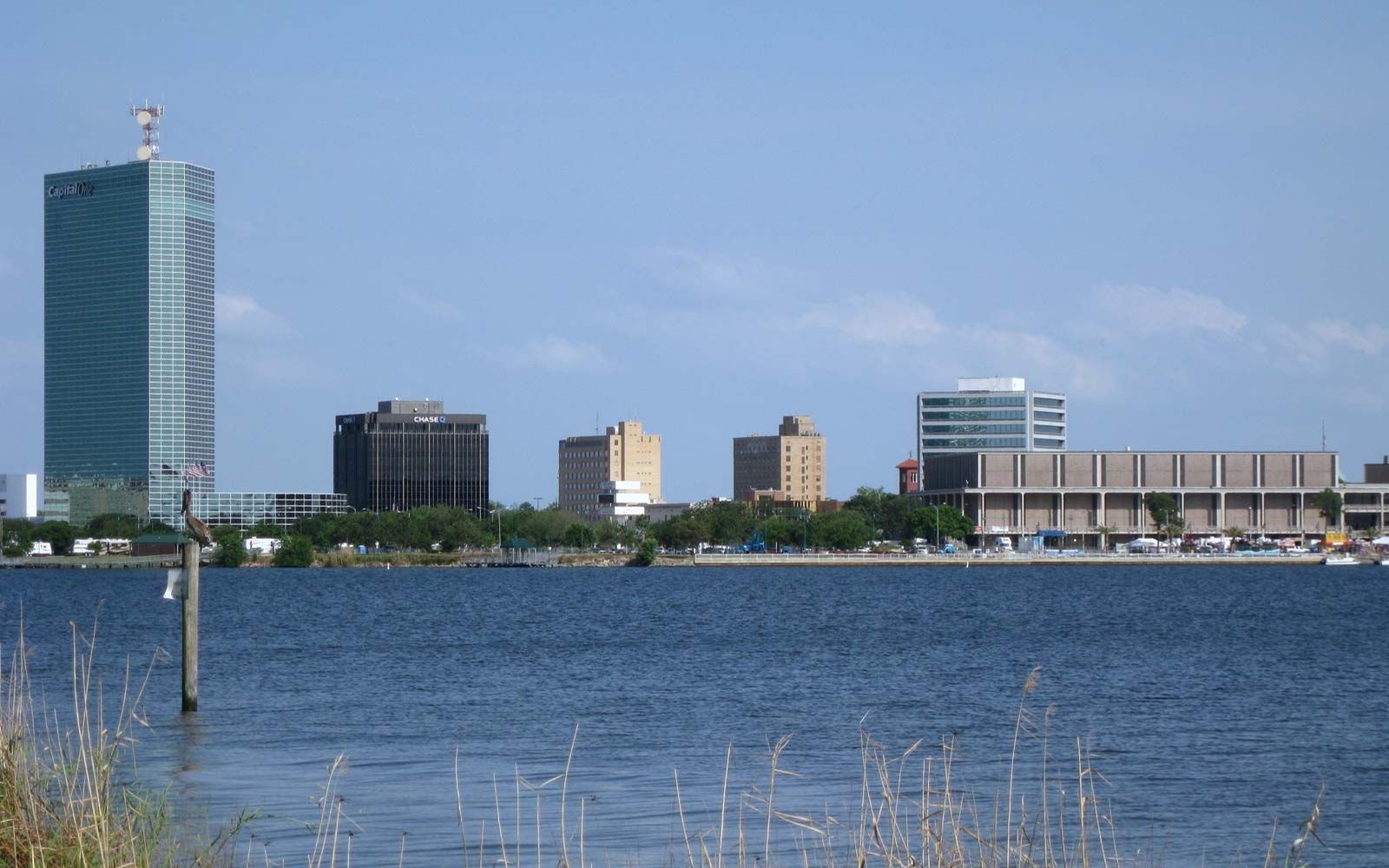
Lake Charles, LA
Equipment financing for oilfield and petrochemical service companies in Lake Charles, LA. Industrial corridor coverage, B/C credit considered. Oilfield lender review after the complete file.
Calcasieu Parish runs one of the densest concentrations of refinery and petrochemical capacity in the United States, and the industrial corridor along Interstate 10 from Lake Charles to the Texas state line has driven equipment demand across well servicing, pipeline maintenance, and heavy industrial services for decades. The Haynesville Shale's southern reach, the Cameron Parish gas production zone, and the LNG export terminals under construction and operation along the Calcasieu Ship Channel all create layered demand for different categories of oilfield service equipment.
We finance equipment for operators based in Lake Charles and throughout the southwest Louisiana territory. Transactions start at $50,000. The typical deal runs $100,000 to $150,000 and higher. We finance new and used equipment purchases, handle refinancing, structure sale-leaseback transactions, and provide cash-out options on free-and-clear assets. B and C credit is considered. Short-form processing handles deals up to around $400,000, with recent operating statements covering most documentation needs. Funding runs roughly one to two weeks from approval.
The industrial activity in this region creates a different dynamic than a pure drilling market. Service companies here often run equipment in refinery turnaround work, pipeline inspection, and gas plant maintenance alongside traditional oilfield service. That diversification shows up in more stable utilization figures, which is a positive when we are analyzing a deal.
Lake Charles Industrial and Oilfield Activity
The Calcasieu Ship Channel gives Lake Charles direct deepwater access to the Gulf of Mexico, which is why LNG export terminal development has concentrated here. Sabine Pass LNG and the Calcasieu Pass LNG project represent multi-billion-dollar construction efforts that ripple through the local equipment and service market. Companies that service the construction and operating phases of these terminals use vacuum trucks, pipeline equipment, compressors, and specialty service rigs alongside traditional oil and gas gear.
Cameron Parish to the south holds conventional oil and gas production that has been active since the 1920s, and the wells in that area require ongoing workover and production maintenance services. Companies based in Lake Charles that cover Cameron and Calcasieu parishes are servicing both conventional production and the newer infrastructure buildout simultaneously.
The Texas-Louisiana border position also means Lake Charles-based companies frequently cross into Beaumont and Port Arthur for industrial service work, extending their effective operating territory and diversifying their client base beyond any single production area. When we evaluate a Lake Charles-based service company, that geographic reach is relevant to the revenue picture.
Equipment We Finance for Lake Charles Operators
Vacuum trucks are probably the most consistently requested category from companies in this market. Industrial cleaning, spill response, saltwater disposal, and pit cleaning services all rely on vacuum trucks, and the demand in the Lake Charles industrial corridor runs year-round regardless of drilling cycle swings. A company with a strong vacuum truck fleet in this market has an advantage in winning industrial maintenance contracts.
Pipeline construction equipment is active here given the ongoing infrastructure buildout around the LNG terminals and the existing gas gathering systems in Cameron Parish. Horizontal directional drilling equipment sees demand in the utility and gas distribution work that surrounds major industrial projects. Companies that do HDD work around refinery and LNG expansions are building a solid contract base.
Gas compression equipment is a strong category for the production side. The Cameron Parish gas wells require gathering compression, and the LNG feed gas supply chain depends on midstream compression capacity that has been expanding as export volumes have grown. We finance compressor packages from small well-site units up to larger midstream installations.
For companies doing well service in the conventional production territory, workover rigs and hot oil trucks round out the equipment mix. Older producing formations in this region have a steady call for maintenance services.
Credit and Documentation for Lake Charles Operators
Service companies in this market often have complex revenue structures, with income from industrial contracts, conventional oilfield work, and construction project billings mixing in the same bank accounts. We look at the total picture rather than requiring a clean separation. If the bank statements show consistent inflows from identifiable clients, that is what matters for underwriting purposes.
Companies that took on new contracts related to the LNG terminal projects may have rapid revenue growth in their recent statements, which can actually complicate bank presentations because the trend looks unusual. We can look at these situations and understand what is driving the numbers. A company that went from $400,000 a month to $900,000 because it landed a turnaround contract is a different risk profile than a company whose revenue spiked from a one-time event.
For B and C credit situations, the quality and consistency of the banking history often outweighs the credit score. Three months of statements showing healthy balances, positive trends, and identifiable deposit sources carry significant weight. Operators who can document their contract base or show active purchase orders from creditworthy industrial clients strengthen their application regardless of where their personal or business credit scores sit.
Questions before you send the file.
Straight answers about lake charles, la, documentation, timing, and equipment eligibility.
My company has an LNG terminal contract that started six months ago and my revenue has grown a lot. Can I use that contract as part of my financing application?
Yes. A copy of the contract and your most recent billing or payment documentation helps us understand the revenue trend. Rapid revenue growth can actually look unusual in bank statements without context. Having the contract in hand lets us underwrite the actual business reality rather than pattern-matching against a standard profile.
I want to add a second vacuum truck to handle more industrial cleaning work. Is that a strong application?
Vacuum trucks in industrial markets tend to underwrite well because the demand is diversified and does not swing as hard with drilling cycles. If your existing truck is generating consistent revenue, adding a second unit to a growing contract base is a straightforward story. Come in with your last three months of statements and we can usually turn around a decision quickly.
Can I refinance a compressor package I bought two years ago and still owe on?
Yes, if there is equity to work with. We look at the current market value of the unit against what you owe. If the payoff is below market value, we can refinance the balance and potentially pull cash out of the equity. The terms available depend on the equipment's age, hours, and condition.
I do both conventional oilfield work and industrial service around the refineries. Does the mixed revenue complicate things?
Mixed revenue is common in this market and does not complicate things for us the way it might at a bank that needs a clean industry classification. We look at total revenue trends and client quality. Industrial refinery maintenance work is often viewed positively because those clients pay on longer but reliable cycles.
How does sale-leaseback work if I want to fund a new equipment purchase with the proceeds?
You sell us your existing equipment at current market value, we lease it back to you so operations continue uninterrupted, and you receive the cash from the sale. That cash can then be used as a down payment on new equipment, reducing the amount you need to finance on the new purchase. It is one of the cleaner ways to recycle equipment equity into fleet expansion without taking on unsecured debt.
Quote desk
Get terms on Lake Charles, LA.
Send the asset details, seller quote, and target timing. We will review the request and tell you what documentation is needed next.