

Workover Rig Financing
Finance new and used workover rigs for remediation, recompletions, and well interventions. B/C credit reviewed. short-app funding to $400k. Oilfield lender review after the complete file.
Production wells don't stay healthy on their own. Every basin has a backlog of wells requiring mechanical remediation, zone isolations, recompletions, and pump changes, and the contractors who keep workover rigs ready earn consistent day-rate revenue even when new drilling activity softens. The economics of workover work are different from new drilling: the rig doesn't need to be a 2,000-horsepower behemoth, but it does need to be mechanically sound and ready to mobilize on short notice. Our workover rig financing covers that market segment, from small hydraulic units to full-size conventional workover rigs capable of handling casing pulls and deep interventions.
We finance workover rigs starting at $50,000 with the typical deal running between $100,000 and several hundred thousand dollars. Structures include equipment loans, equipment leases, and Equipment Sale-Leaseback arrangements. Workover and well service operators at every credit tier are considered; B/C credit histories get a review, not an automatic pass.
Workover Rig Types and Their Collateral Profiles
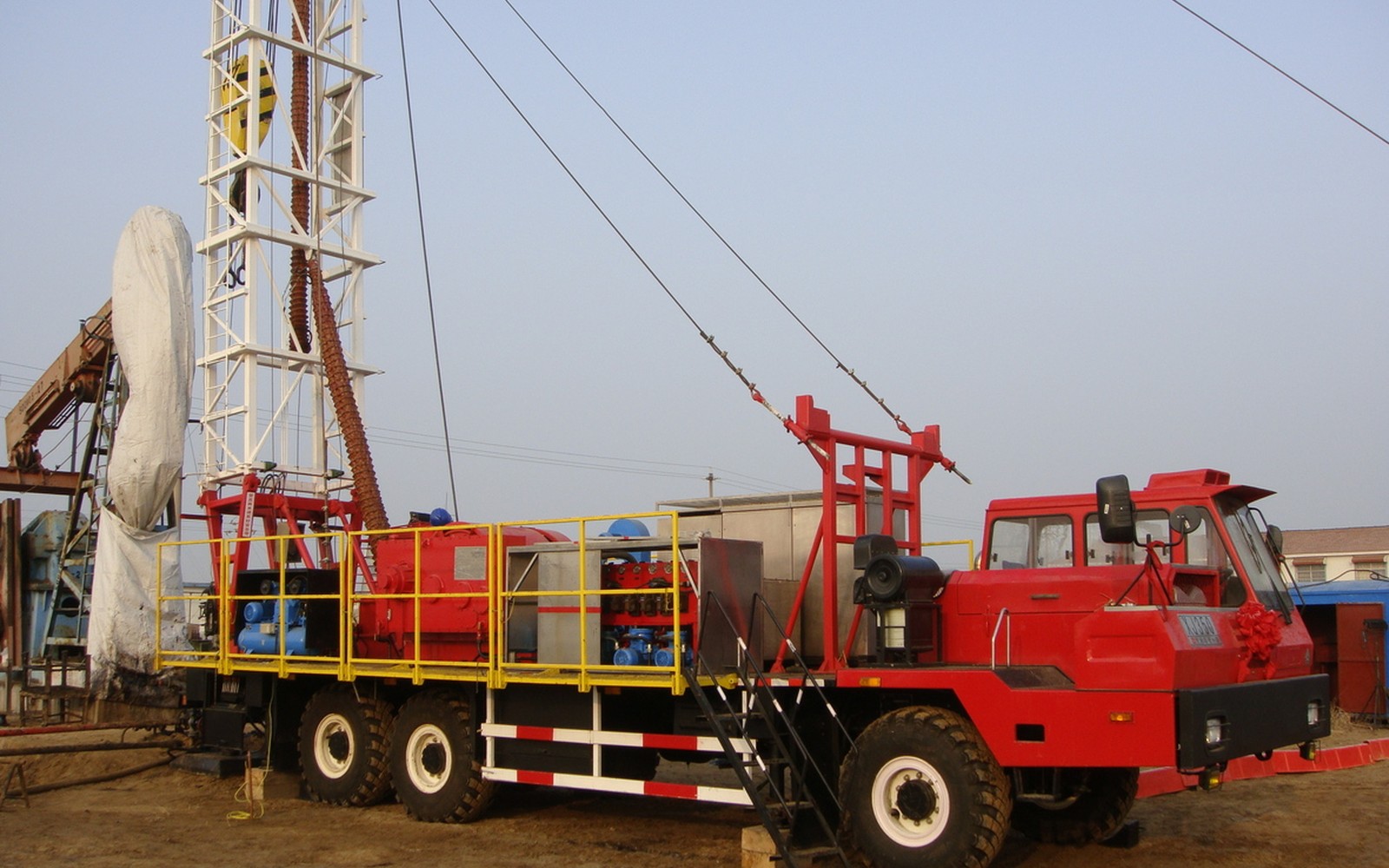
The workover rig category covers a wider equipment range than most lenders outside the oilfield appreciate. At the lighter end, a hydraulic pulling unit (also called a hydraulic workover unit or slant rig) handles pump rod pulls, tubing pulls, and routine mechanical services on shallow to mid-depth wells without full mast deployment. These units are often truck-mounted, mobile, and relatively fast to move between locations, which makes them attractive for operators running tight route schedules.
Conventional workover rigs with full mast, rotary table, and drawworks configuration handle deeper work: casing patches, perforating, zone completions, and full recompletions that require tubular handling. These units may include well control equipment such as blowout preventers for higher-pressure applications. The Weatherford W-Series workover rigs, for example, have a well-established secondary market in the US. Lenders evaluate workover rigs based on hook load rating, mast height, power unit condition, whether the unit is self-propelled or trailer-mounted, and the breadth of work types it can handle.
- Hydraulic pulling units: lighter duty, fast mobilization, limited to shallower work
- Conventional workover rigs: rotary capability, casing and tubing handling, deeper interventions
- Power unit condition (engine hours, prime mover brand) is a key collateral determinant
- Self-propelled versus trailer-mounted affects mobilization cost and secondary market liquidity
Who Uses Workover Rig Financing
The core buyers are independent well service companies running one to ten rigs, often in mature producing basins where the production base justifies consistent workover demand. The Permian, the East Texas Woodbine, the Anadarko, the San Juan Basin in New Mexico, and the legacy Appalachian fields in West Virginia and Pennsylvania all generate steady workover activity because they have large numbers of aging producing wells. Contractors operating in Midland, TX, Elk City, OK, or Farmington, NM understand this segment well.
A second buyer type is the independent oil and gas producer who wants to own their own workover capability rather than contract it out. For an operator running a tight lease block with frequent well intervention needs, owning a workover rig can pencil out over contracting, particularly if the rig can be deployed on neighboring leases to generate third-party revenue. That owner-operator profile is common in the mid-continent and the Rockies.
Documentation and Credit Requirements
Short-form financing up to roughly $400,000 is available for workover rig deals with clean title and a current mechanical inspection. This path requires only a credit application and a purchase agreement; no tax returns or financial statements are needed. It's the fastest path to funding for established operators who don't want to pull together a full doc package for a mid-size acquisition.
For deals above the short-form threshold, or for borrowers with thinner credit profiles, the full-documentation path requires three months of bank statements and often a basic profit-and-loss. B/C credit operators who have been in business at least twelve months and can show operating cash flow relevant to the payment have the best chance of approval through the full-doc track. Our oilfield challenged-credit financing program is specifically designed for those situations. New companies with less than a year of history face a steeper path but can sometimes qualify with a strong down payment and clear contract income. Existing equipment that can be pledged as additional collateral also helps.
Extracting Capital from Workover Rigs You Already Own
Workover rig operators frequently carry paid-off units that represent substantial equity. A cash-out refinance on a rig you own free and clear converts that equity into working capital without requiring a sale. The structure is simple: we put a lien on the rig at a percentage of its appraised value and advance that amount to your operating account. Typical advance rates depend on the rig's age, condition, and secondary market liquidity.
A sale-leaseback works when you want the full appraised value rather than a partial advance. You sell the rig to the financing entity at appraised value and immediately lease it back at a monthly payment, keeping the unit in service on your jobs. The full purchase price hits your account, the rig stays on location, and you have a fixed monthly payment instead of a lump sum of capital tied up in depreciating iron. For contractors preparing to bid on a contract that requires additional working capital, this is one of the cleaner structures available.
Questions before you send the file.
Straight answers about workover rig financing, documentation, timing, and equipment eligibility.
Can I finance a workover rig that came out of a package deal or an estate sale?
Yes, provided clear title can be established. Package deals and estate sales sometimes create title complexity, but that's a solvable problem, not a disqualifying one. We'll need a purchase agreement, the title chain documentation, and a current inspection report. If the title situation is complicated, it's worth discussing before you close the purchase so we can flag any issues early.
Do workover rigs qualify for Section 179 expensing?
Section 179 allows businesses to deduct the cost of qualifying equipment in the year of purchase rather than depreciating it over multiple years. Workover rigs used in an active business generally qualify. The tax benefit doesn't change the financing structure itself, but it can affect whether a loan versus a lease makes more sense for your tax situation. Talk to your accountant about your specific deduction picture alongside whatever financing quote we provide.
Can I add a workover rig to an existing equipment loan I already have?
A new workover rig acquisition is typically structured as a new, separate equipment loan rather than added to an existing note. The new unit stands as its own collateral. If you're looking to simplify multiple payments into one facility, an equipment refinancing that combines multiple assets is a conversation worth having, though it depends on the lender's appetite for that structure.
What if the workover rig needs BOP equipment to qualify for certain contract work?
Blowout preventer equipment can sometimes be bundled into the same financing package as the rig itself, or structured as a separate deal alongside the rig note. The BOP is its own capital asset with its own recertification requirements, so lenders treat it as collateral in its own right. Tell us about the full equipment package you need, and we'll look at bundling options.
Can a sole proprietor or single-member LLC finance a workover rig?
Yes. The legal structure of the entity isn't a barrier. Sole proprietors and single-member LLCs are common borrower types in the workover segment. What matters to underwriters is the business's cash flow, the credit profile, and the strength of the collateral, not whether the business is organized as a corporation or a simple LLC.
Quote desk
Get terms on Workover Rig Financing.
Send the asset details, seller quote, and target timing. We will review the request and tell you what documentation is needed next.