

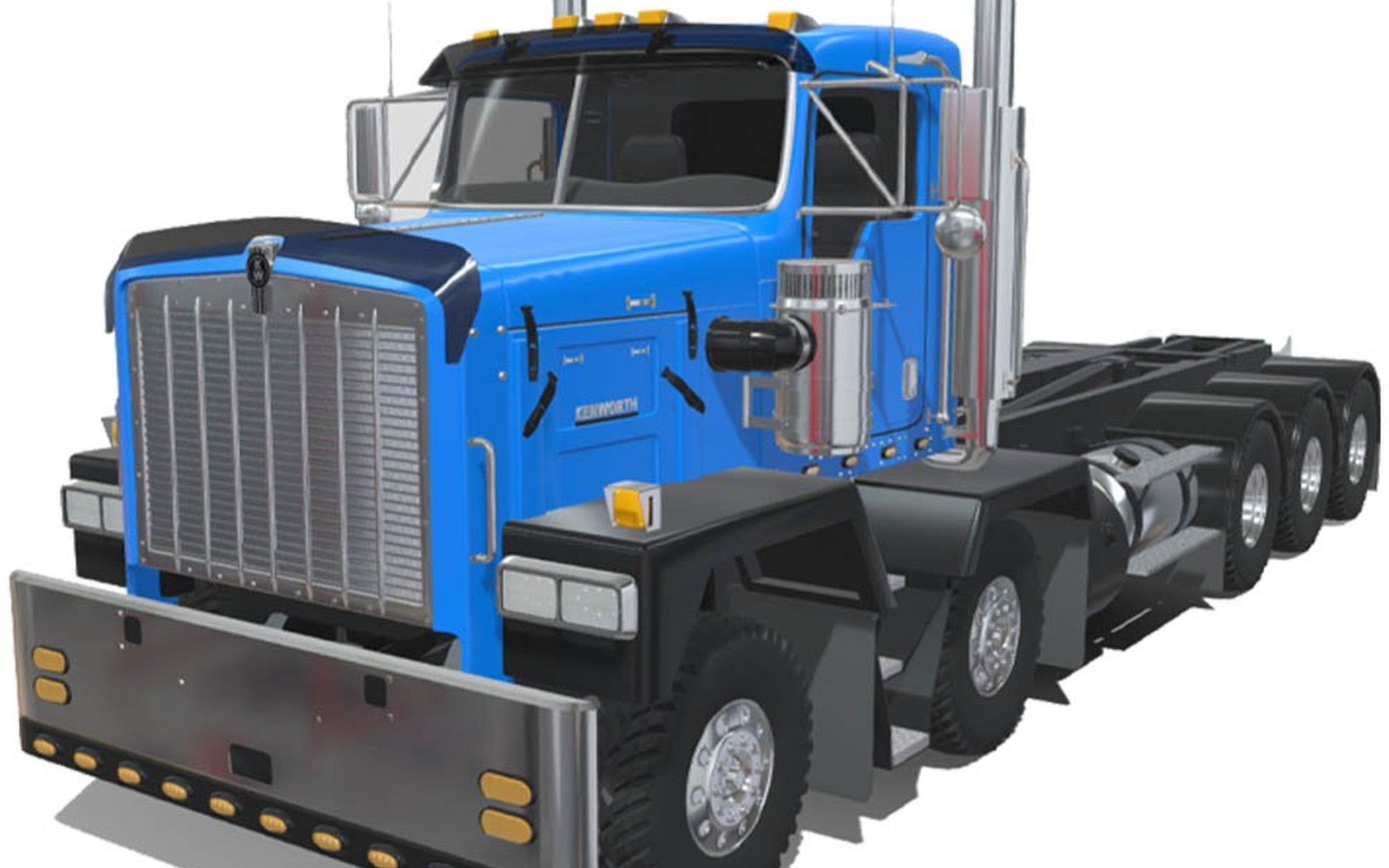
Kenworth C500 Financing
Finance a Kenworth C500 for oilfield winch truck, heavy haul, or vocational builds. Loans and leases from $50k. B/C credit OK. Oilfield lender review after the complete file.
There are trucks and then there are rigs-on-a-truck. The Kenworth C500 is the latter. Purpose-built for severe-duty vocational applications, the C500's cab-over-engine design (in earlier generations) and the set-forward hood configuration (in later production) were engineered to maximize frame length for body mounting, clearance for extreme-angle upfit work, and the payload capacity that oilfield winch, crane, and pipe-haul applications demand. On a Permian Basin rig-move or a Bakken heavy transport spread, the C500 is the truck people are watching come through the gate.
Our financing covers the C500 across all oilfield configurations. Winch trucks, bed trucks, crane carriers, and specialized body builds all qualify under the Kenworth heavy-duty financing program we run for oilfield operators. Minimum deal size is $50,000 and we fund in field-ticket review after a complete application. For high-spec C500 builds, which frequently price above $200,000 with the right upfit, we have lender relationships specifically calibrated to this end of the market.
What Makes the C500 Different
The C500 is not a general-purpose heavy truck. The chassis was designed from the beginning for high-capacity upfit work that standard vocational frames cannot accommodate. The cab positioning (either cab-over-engine in older units or the distinctive set-forward conventional hood on more recent builds) frees up frame length in ways that allow body builders to mount longer bed configurations, crane booms, or extendable winch platforms without running out of wheelbase.
In oilfield service, the C500 appears most often as a bed truck with a hydraulic bed for transporting large drilling equipment, a winch truck with a severe-duty Tulsa or Braden winch for rig assist work, or a crane truck carrier for picker cranes used in rig assembly and pipe handling. The drivetrain is specced accordingly, with Allison automatic transmissions common in crane applications and synchronized manuals or automated manuals in winch and bed truck builds where the driver needs precise gear management under a heavy pull.
The C500's combination of extreme payload capacity, frame rigidity, and available all-wheel-drive configurations has kept it active on rig-move crews across the Williston, Permian, and DJ basins. These are slow-cycle assets relative to a fluid hauler, but they earn per job rather than per day, and the day-rate equivalent on a rig-move spread is strong. Oilfield trucking companies that specialize in rig moves build their equipment lists around platforms like the C500.
Pricing, Terms, and Financing Structures
C500 pricing depends heavily on the upfit. A used winch truck C500 with 300,000 miles and a serviceable hydraulic winch might price between $80,000 and $140,000. A fully spec'd new or low-hour bed truck or crane carrier build can reach $350,000 or more when you include the body, hydraulics, and auxiliary equipment. We finance across that entire range.
For transactions up to roughly $400,000, short-form approval is available. Above that threshold, three months of bank statements and basic business financials round out the file. We do not require audited financials for most C500 deals, even at the higher price points, though strong documentation of existing contracts accelerates the process significantly.
For buyers who prefer to lease rather than purchase outright, an equipment lease keeps the monthly payment lower and preserves cash for payroll, fuel, and operating costs. The end-of-term options on a lease include a purchase at fair market value or, if you need to upgrade the upfit, returning the chassis and transitioning to a newer build. We can model both paths side by side.
Buyers managing a fleet of C500s and similar heavy vocationals should also ask about a blanket facility. A single credit line covering multiple units simplifies administration and sometimes yields better aggregate pricing than one-off transactions.
Cash-Out and Sale-Leaseback on C500 Units
A C500 winch truck or bed truck with clear title is a real asset. If your business needs operating capital and you own the truck free and clear, a cash-out refinance or sale-leaseback puts that capital to work without forcing you to sell the truck and replace its utility. We assess the current fair market value, structure the payout, and you continue operating under a loan or lease on your normal schedule.
This structure is particularly common when an operator wins a new contract that requires a deposit or startup capital before day-rate revenue begins flowing. Unlocking equity in the existing fleet is often faster and cheaper than raising new equity or taking on an unsecured loan.
Sale-leaseback on a used C500 requires a clean title, a basic condition assessment, and a realistic estimate of the truck's current market value. If the truck has a small existing lien rather than being fully paid off, refinancing to a clean loan and pulling additional cash out simultaneously is also an option we handle regularly.
Many operators pair this with Freightliner Financing, Volvo Construction Equipment Financing, and Komatsu Financing.
Questions before you send the file.
Straight answers about kenworth c500 financing, documentation, timing, and equipment eligibility.
Can I finance just the C500 chassis separately from the upfit body?
In most cases, we prefer to finance the complete unit once the upfit is installed or contracted. A chassis alone has lower collateral value than a complete functional truck. If the build is staged, we can sometimes hold the chassis financing open while the upfit is completed, releasing funds in stages against the build progress. Reach out to discuss the specific timeline.
The C500 I want has a Tulsa winch installed by a previous operator. Does that affect financing?
Third-party winch installations are common on C500 units and do not necessarily complicate financing. We need to understand the winch make and model, its rated line pull, and whether it is in working condition. A functional, rated winch adds to collateral value. A failed or unknown-condition winch is treated more conservatively.
How does a rig-move contract affect my ability to get financing on a C500?
A contract or purchase order for rig-move work is one of the strongest supporting documents you can bring to a financing application. It demonstrates the cash flow that will service the debt and confirms the truck has immediate utilization. If you have a contract in hand, include it with your application.
I have two C500s I want to add to my fleet and one has a small existing lien. Can I finance both?
Yes. We can structure the truck with the existing lien as a refinance (paying off the current lender) combined with a new loan on the second unit. Alternatively, a blanket facility covers both units under a single credit line. Either path is available and we can show you the cost comparison.
My business credit score is low because of slow customer payments during a down cycle. Can we get approved?
Credit events tied to industry cycles, like a thin period during a price downturn, are understood in oilfield lending. We look at current bank statements and current contract positions more than historical credit scores in those situations. If the business is running and the truck will be earning from day one, the file can often move forward despite a difficult prior year.
Quote desk
Get terms on Kenworth C500 Financing.
Send the asset details, seller quote, and target timing. We will review the request and tell you what documentation is needed next.