

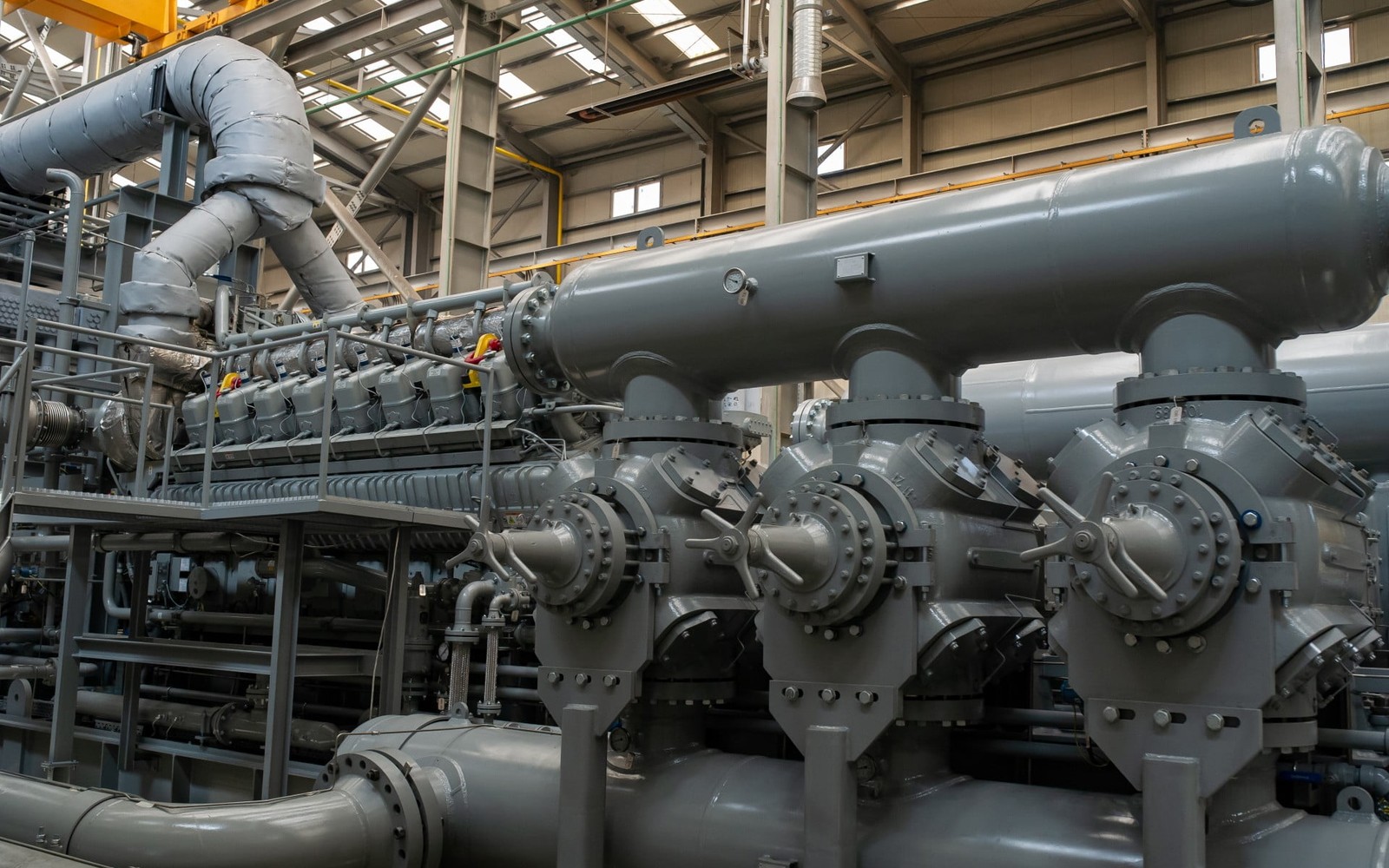
Waukesha VHP L7044GSI Engine Financing
Finance a Waukesha VHP L7044GSI engine or full compressor package. Oilfield-savvy lenders, challenged credit reviewed, streamlined oilfield files to $400k.
The Waukesha VHP L7044GSI is among the most recognized natural gas engine platforms in the compression market. Its six-cylinder, 12-liter displacement design produces horsepower ratings typically in the 650 to 825 bhp range at compression service speeds, making it the driver of choice for a broad range of gathering, boosting, and production compression applications. Operators across the Permian, Appalachian, and mid-continent basins have been running L7044GSI-powered packages for decades. Financing one of these packages, whether new from a fabricator or sourced used from a fleet dispersal, requires a lender who understands that the engine is only half the asset.
We arrange financing for complete compressor packages designed for the VHP L7044GSI as well as stand-alone engine replacements and rebuilds. Our floor is $50,000, the heart of our book runs $100,000 to $300,000 and beyond, and short-form approvals extend to approximately $400,000 on qualifying transactions.
The L7044GSI as a Compression Driver
Dresser-Waukesha (now INNIO Waukesha) designed the VHP series for industrial natural gas applications, and the L7044GSI variant uses fuel injection rather than carburetion. The GSI designation reflects the Gas Spark Ignition with injection configuration. At typical compression service speeds of 900 to 1200 RPM, the L7044GSI delivers reliable horsepower with good thermal efficiency for a naturally aspirated design of its era.
In compression packaging, the L7044GSI is most often mated with larger Ariel or Exterran compressor frames. When an operator sees an Ariel JGC or JGK package with a Waukesha driver, the L7044 series is a frequent match. Because these packages run at steady-state for extended periods, the engine accumulates hours faster than a mobile application would, and lenders factor service interval compliance into their collateral assessment. A package with documented overhaul records commands better advance rates than one with an unknown service history.
The secondary market for L7044GSI-powered packages is deep and active. Independent packagers, rental companies, and production companies regularly buy and sell these units as their basin deployments shift. That secondary liquidity is what supports favorable lender terms: when a lender knows a unit can be remarketed without difficulty, they advance more aggressively and structure terms more favorably. Used compression package financing on L7044GSI-powered units is a routine part of our business.
Buyers and Operators We Work With
Contract compression operators managing units for gathering system accounts represent the largest segment of our L7044GSI borrower base. These are the businesses that own the iron, deploy it at a producer's wellhead or gathering header, collect a monthly contract payment, and maintain the units in the field. Their financial profiles look like asset-heavy service companies with predictable recurring revenue, and that is a profile most specialty lenders can underwrite confidently.
We also work with independent oil and gas producers who are adding owned compression capacity rather than contracting it out. For a producer running a small gathering system or wanting to control compression costs by owning their own units, a VHP L7044GSI package is a significant capital investment that benefits from a structured multi-year financing rather than a cash purchase. Spreading that cost over 48 to 72 months keeps working capital available for drilling, completion, and operating costs.
Oilfield rental companies that rotate compression inventory across multiple producers also use our financing for fleet expansion. When a new basin or a new contract creates sudden demand for additional horsepower, a fast approval and a 10-to-14-day funding timeline means they can commit to the contract without waiting on internal capital allocation cycles.
Refinancing Existing VHP Packages
Waukesha VHP L7044GSI packages that have been running in the field for several years often carry significant appraised value relative to their depreciated book value. Operators who bought these units years ago and have been paying them down, or who purchased them outright, can use an equipment refinance or sale-leaseback to pull that embedded equity out as working capital.
A sale-leaseback on a deployed L7044GSI package works well when the unit is on an active contract. The financing company values the package, purchases it at appraised value, and leases it back to the operator at a fixed monthly payment. The operator retains possession and continues operating the unit exactly as before, while receiving the sales proceeds as liquidity. The cash can fund a new unit, pay down higher-cost debt, or cover operational expenses during a contract gap or down cycle.
How the Process Works
Submit the unit's specifications, including the engine model, serial number, horsepower rating, hours if known, the compressor frame make and model, and any ancillary equipment on the skid. Include the desired transaction amount and structure, whether purchase, refinance, or leaseback. We review the deal and return a credit indication within one business day on most applications.
Once approved, deal documents are prepared and sent for execution. Funding follows after documents are returned and the seller is confirmed. Most straightforward transactions close within one to two weeks. If the unit is at a remote field location, we can work around inspection logistics to keep the timeline intact. Our lenders have financed units in the Permian, Williston, Haynesville, and Appalachia and are accustomed to compression collateral sitting in the field rather than at a dealer lot.
Operators interested in learning how tax treatment differs between a loan and a lease should review the fair market value lease option. FMV leases allow lower monthly payments with a purchase option at term end and may offer full operating expense deductibility, which has meaningful implications for operators with significant taxable income from production or service contracts.
Questions before you send the file.
Straight answers about waukesha vhp l7044gsi engine financing, documentation, timing, and equipment eligibility.
Can I finance a used L7044GSI package with high hours if it has a recent overhaul?
A recent top-end or major overhaul with documentation significantly improves lender confidence on high-hour units. Lenders look at the effective remaining service life after the overhaul rather than raw hour count. Bring the service records and we can present the deal with the strongest possible collateral narrative.
The unit I want to buy is at a private sale from another operator. Can you fund that?
Yes. Private-party transactions are common in the compression market. You will need a bill of sale, the purchase price, and the equipment description. We fund directly to the seller after documents are executed. Title transfer completes the collateral perfection.
Can I bundle a VHP engine purchase with other equipment in one deal?
Yes. Multi-unit or multi-equipment transactions can be bundled under a single credit facility. Bundling is often more efficient than running separate applications and can simplify paperwork and funding logistics, especially when multiple pieces are being acquired from the same seller.
What is the maximum loan-to-value on a used L7044GSI package?
Advance rates vary by age, condition, and borrower credit profile. Newer or recently overhauled units in documented condition can achieve advance rates in the 80 to 100 percent range on strong credits. Older units or weaker credits typically see 70 to 85 percent. We present the specific terms after reviewing your application and the equipment.
Does INNIO's rebranding of the Waukesha line affect parts availability or financing?
Parts availability for L7044GSI-era engines is generally good given the large installed base and INNIO's continued support for legacy Waukesha products. From a financing standpoint, the installed base size is actually a positive for collateral value because a deep service and parts network keeps these units in service longer and supports their secondary market value.
Quote desk
Get terms on Waukesha VHP L7044GSI Engine Financing.
Send the asset details, seller quote, and target timing. We will review the request and tell you what documentation is needed next.