

Pipelayer Financing
Finance new or used pipelayers for oil and gas pipeline construction. Cat PL83, PL87, 587T, Volvo PL4809D, Komatsu D155C. $50k minimum, fast approvals.
A pipelayer sits at the center of every mainline pipeline spread, and a spread without enough of them stalls. Crew, trenching equipment, side booms, and welding rigs all wait on the pipe lift. Pipeline contractors who can field the right number of pipelayers for a spread's width and pipe diameter are the ones who hit schedule; those short on iron fall behind and absorb penalty exposure. Financing that closes in two weeks or less is what gets the iron on the job before the window closes.
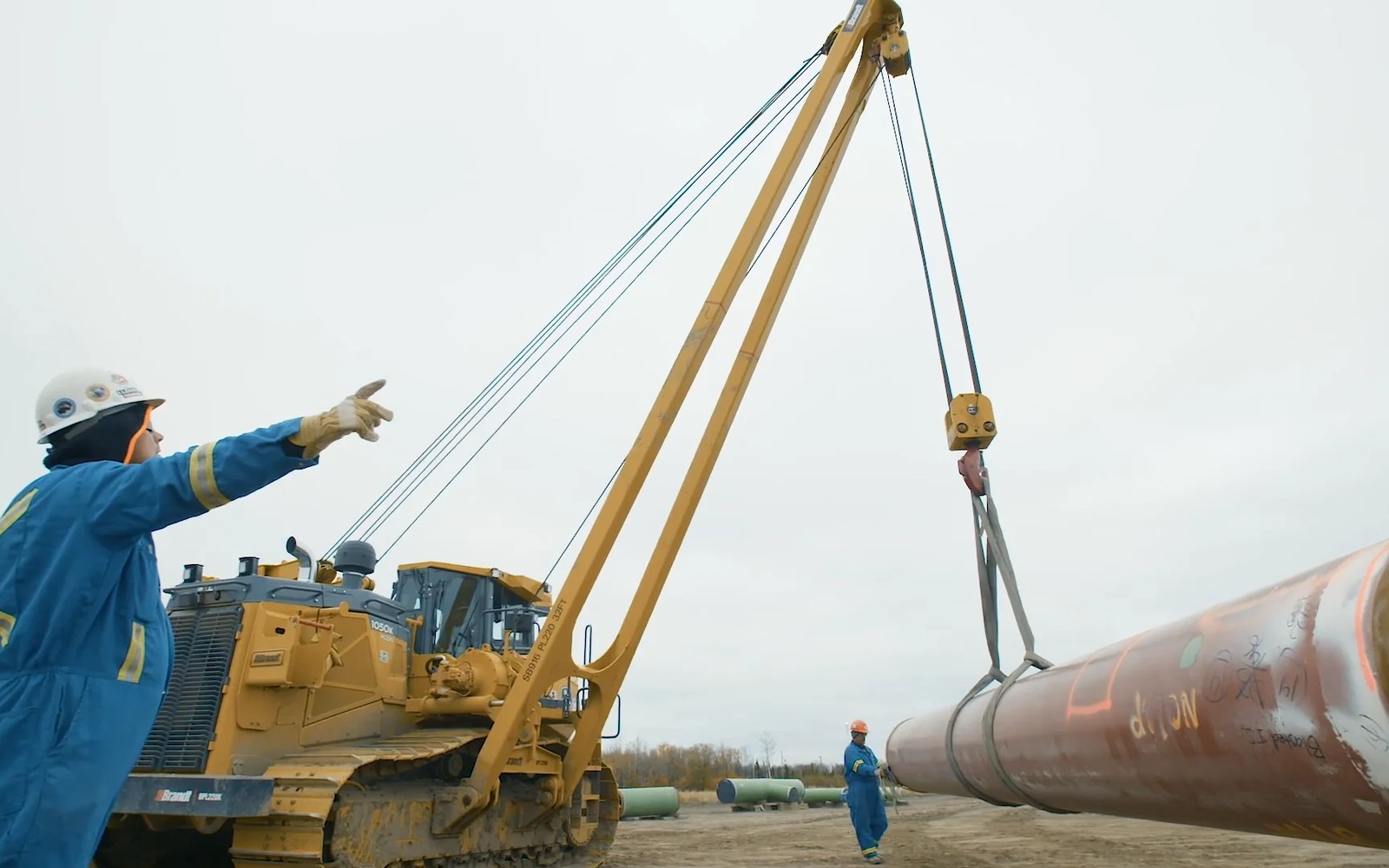
Pipelayers are dedicated track-mounted machines derived from crawler tractor platforms, with a side-mounted lattice boom and counterweight system that allows the operator to lower pipe into a trench while the machine walks alongside the ditch. The Caterpillar product line dominates the North American market, with the Cat PL83, Cat PL87, and Cat 587T covering a wide range of pipe diameters and lift capacities. Volvo and Komatsu also produce capable units. New large-bore pipelayers can exceed $500,000; well-maintained used units covering common mainline diameters are available from $120,000 upward. We finance from $50,000 with short-form processing to approximately $400,000.
What Makes a Pipelayer Strong Collateral
Pipelayers are specialized enough that lenders unfamiliar with pipeline construction sometimes treat them as generic heavy equipment. Lenders who know the pipeline market understand that a well-maintained pipelayer with documented undercarriage life, current boom and rigging inspection, and known service history holds value in an active secondary market supported by both domestic pipeline projects and international demand.
Key collateral factors:
- Rated lift capacity matched to common pipe diameter ranges (the 587T, for instance, is rated at 90 tons, suitable for large-diameter mainlines)
- Undercarriage condition (the primary wear component; tracked equipment with measured wear above 60 percent carries a discount on advance rate)
- Boom and sheave condition (load rating and inspection history)
- Engine hours relative to model service-life expectations
- OEM versus non-OEM engine and components
The Volvo PL4809D and Komatsu D155C are frequently encountered in secondary-market transactions and are well understood by lenders active in this segment. Caterpillar-platform units maintain the broadest secondary-market liquidity in North America. We finance all major brands on new and used purchases.
Contractors Who Finance Pipelayers Here
Mainline pipeline construction companies building gathering systems, transmission lines, and large-diameter gas or liquids lines in the Permian, DJ Basin, Appalachian, and other active gathering regions are a primary applicant type. Contractors scaling up spreads for multi-year FERC-regulated mainline projects need multiple pipelayers simultaneously and use our financing to move quickly as project scopes firm up.
Smaller contractors specializing in gathering system construction, lateral connections, and in-field gathering lines typically operate with one to three pipelayers and use our financing to replace aging units or add capacity for a new project. These operators often work at the intersection of oil and gas pipeline construction and general utility corridor work, and a well-maintained pipelayer serves both markets.
Contractors based in Midland, TX, and Casper, WY, two active centers for gathering system and transmission pipeline work, are frequent applicants. We also regularly finance pipelayers for operators in the Appalachian Basin and Gulf Coast corridor. Used equipment financing is a significant part of our pipelayer transactions, as the secondary market is deep and many contractors find used machines from prior pipeline project dispersals at attractive prices.
Financing Terms and Structures
Equipment loans on pipelayers run 24 to 72 months depending on machine age and transaction size. Advance rates on new machines typically reach 100 percent of invoice. Used machines appraise at secondary-market comparables, and advance rates generally land at 80 to 100 percent of appraised value depending on hours, undercarriage, and overall condition. Short-form processing handles transactions to approximately $400,000; full-doc structures above that require recent operating statements and sometimes a review of company financials.
Pipeline construction work is project-driven, and some contractors prefer financing structures that account for project seasonality or completion-based income patterns. Deferred-start options and step-payment structures are available for contractors whose income is tied to project milestones. Discuss the project timeline when you apply and we will shape the structure accordingly.
Contractors who own pipelayers free and clear and need working capital for a new project can use a Equipment Sale-Leaseback to convert the equity in those machines into capital for crew mobilization, fuel, insurance, and bid bonds while keeping the equipment on the job. This avoids the need for a working capital line during the bridge period before project draws begin.
Questions before you send the file.
Straight answers about pipelayer financing, documentation, timing, and equipment eligibility.
Can I finance a pipelayer that needs undercarriage work before it goes on the job?
A machine requiring undercarriage replacement is a common secondary-market scenario. Some lenders will finance the machine plus the undercarriage repair in a single transaction if the post-repair value supports the advance. Others require the repair to be completed before closing. Describe the condition in your application and we will advise on the best approach.
We are a newer pipeline contractor, three years in business. Can we qualify for pipelayer financing?
Three years in business is a strong threshold for oilfield equipment financing. Provide three months of bank statements, a project history or current contract, and the principals' background. Contractors with experienced principals and demonstrable project revenue history at that age regularly close transactions with us.
Can I finance multiple pipelayers for a spread at once under one application?
Multi-unit transactions are handled as a single approval if the total is within a range we can process efficiently. Larger multi-unit spreads may require a full financial package. Let us know the full scope of what you need and we will structure the submission accordingly.
Are there seasonal payment options for contractors whose pipeline work is heavy in spring and summer?
Yes. Seasonal or step-payment structures are available for contractors with predictable seasonal income patterns. Payments can be structured with lower amounts during slower periods and higher amounts aligned to your active construction season, or with a deferred start period that lines up with project mobilization.
Can I buy a pipelayer from another contractor directly rather than through a dealer?
Private-party purchases between contractors are common in pipeline construction equipment. We finance private-party transactions. You will need a signed purchase agreement, documentation of the machine's history, and in many cases an independent appraisal or inspection to support the advance.
Quote desk
Get terms on Pipelayer Financing.
Send the asset details, seller quote, and target timing. We will review the request and tell you what documentation is needed next.