

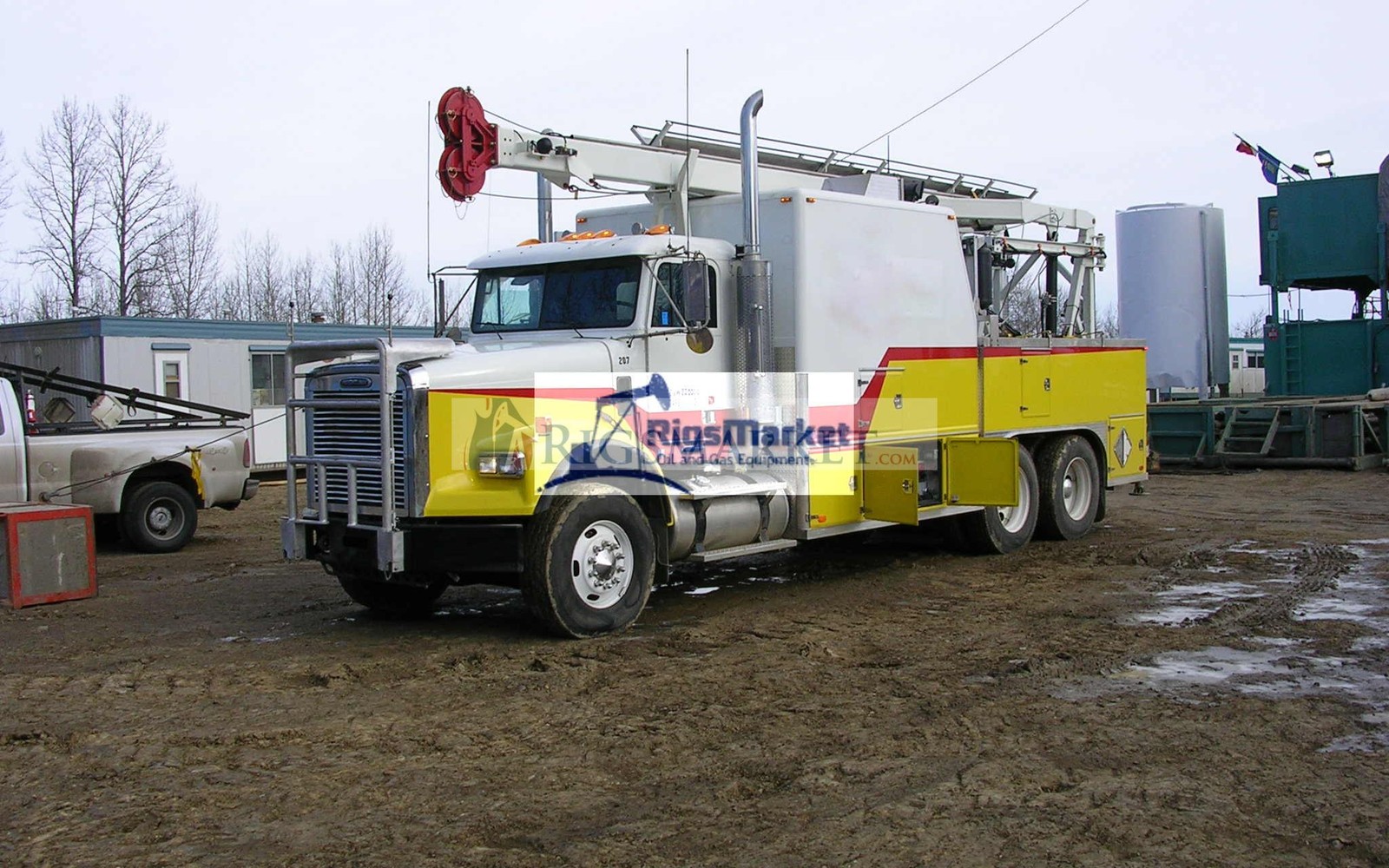
Wireline Truck Financing
Finance wireline trucks for e-line, slickline, and cased-hole logging operations. Loans, leases, and sale-leaseback for new and used units. B/C credit.
Wireline companies live and die by truck availability. A unit that goes down during a completion job, or a company that can't field a second truck when the operator calls, loses the work to somebody who can. Whether the work is cased-hole logging, perforating, plug setting, fishing, or slickline gauge runs, the truck is the delivery vehicle for all of it. Adding capacity or replacing an aging unit is a capital decision that directly affects how many jobs a company can accept in a given week.
Our wireline truck financing covers e-line trucks, slickline trucks, and combination units capable of running both electric line and braided cable work. Minimum transaction is $50,000, with most completed wireline truck deals running from $150,000 into the mid-six figures for newer units with upgraded logging skids. We work with wireline service companies across basins and structures the deal around what the unit actually does, not a generic truck transaction.
What Goes Into a Wireline Unit and Why It Matters to Lenders
A wireline truck is not a truck with a spool on it. The value is in the logging skid, the wireline unit (drum, drive, and level wind), the cable itself, and the surface instrumentation that records and processes the downhole data. A complete e-line truck running cased-hole logging will carry a logging skid with a surface panel, depth measurement wheel and encoder, tension and speed readouts, and the processing computer that captures formation data in real time. The cable is itself a significant capital item: seven-conductor monocable suitable for full cased-hole logging runs can reach meaningful per-thousand-foot costs, and a fully spooled drum on a functional unit represents real secondary market value.
Slickline units are mechanically simpler but still purpose-built. The slickline drum, injector (if present), measuring and logging heads, and the tubing head adapter inventory all contribute to the unit's operational capability. A slickline company that services a large number of producing wells runs high cycles on its measuring wheel and cable, and the condition of that consumable inventory is something an experienced lender accounts for in the collateral assessment.
- E-line truck components: logging skid, surface panel, seven-conductor monocable, depth measurement system, and processing computer
- Slickline unit components: single-conductor drum, measuring head, downhole tool string inventory
- Cable condition and footage remaining on the drum factor into secondary market value
- Truck chassis (typically a heavy-duty Class 8 or Class 7 frame) carries OEM value separate from the wireline package
One factor that separates wireline truck lenders who understand the business from those who don't is cable accounting. A drum that looks full may carry a cable nearing the end of its rated cycle life. Experienced lenders consider this, which is why working with a financing partner who knows what these units do gives you better deal structures and fewer surprises at closing.
New Versus Used Wireline Truck Decisions
New wireline trucks from OEM integrators give you current logging system capability, a factory warranty on the chassis and skid, and a clean collateral picture that simplifies financing. The tradeoff is price: a fully equipped new e-line truck with a modern digital surface system and fresh cable can reach into the seven-figure range depending on the logging capability and geographic configuration. For a company that needs a unit operational in the Permian or the Bakken quickly, that lead time on a new build can be a problem.
Used units from the secondary market, or acquired through a competitor selling assets, frequently offer the fastest path to additional capacity. A five-to-seven-year-old e-line truck with a logging skid that runs the current formation evaluation jobs in your basin, a cable with documented remaining life, and a chassis in serviceable condition can provide the revenue the company needs at a fraction of new cost. Used equipment financing for wireline trucks is available through our panel lenders, and the requirements are practical: documented condition, title history, and a clear description of the current cable situation. Deals up to approximately $400,000 move on an short-form basis with no tax returns or financial statements required, making the used-unit path accessible for smaller operators who need to move quickly.
Refinancing or Sale-Leaseback on Existing Wireline Units
A wireline company that owns its trucks free and clear is sitting on collateral that can be converted to working capital through a Equipment Sale-Leaseback arrangement. The company sells its trucks to a financing entity at an agreed value, then leases them back under a multi-year operating lease. The cash from the sale goes to the business for any purpose: hiring additional wireline operators, purchasing downhole tool inventory, covering slow-season operating costs, or moving into a new basin. The trucks stay in the yard and keep running jobs. Sale-leaseback works particularly well for wireline companies that have paid off older units but face capital demands that a bank line of credit won't cover efficiently.
Refinancing an existing note is also an option. If market rates have moved or if the original deal was done in a hurry and the terms weren't optimal, a refinance can reduce the monthly payment and free up cash flow without requiring new collateral. Operators in Odessa, TX and Williston, ND have used both structures to manage fleet capital during active drilling cycles. Contact us with the current payoff on your existing wireline unit note and we'll show you whether a refinance pencils out.
How Fast We Fund Wireline Truck Deals
Short-form deals under $400,000 can approve in one to three business days with a completed credit application and a purchase agreement or dealer quote. Deals above that threshold, or deals where the credit profile requires full financial documentation, run on a timeline of seven to fourteen business days from complete submission to funding. We've seen oilfield equipment deals close in under a week when the borrower is organized and responsive, and we've seen them drag two months when the seller can't produce clear title documentation. The document side is almost always the rate-limiting step, not the underwriting.
What we need to start: the business name and structure, basic principal information, the equipment description (year, make, model, configuration, cable footage and condition), and a quote or purchase agreement. If you're buying from a dealer, a dealer invoice works. Private-party purchases require a bill of sale and a title or lien search confirming the seller's position. We do not require three years of tax returns on short-form deals, which is how smaller wireline operators get deals done without the documentation burden of a traditional bank process.
Questions before you send the file.
Straight answers about wireline truck financing, documentation, timing, and equipment eligibility.
Can I finance a wireline truck that includes a fully loaded downhole tool string inventory?
Downhole tool inventory (perforating guns, setting tools, pressure gauges, fishing tools) can sometimes be included in the financing package alongside the truck, but lenders treat consumable and soft assets differently than titled hard assets. The truck and logging skid are the primary collateral. Tool inventory may be included up to a percentage of the truck value depending on the lender. Discuss what you want to include when you apply and we'll structure accordingly.
My wireline truck chassis has high mileage but the logging skid is relatively new. How do lenders evaluate this?
Lenders look at the complete unit, not just the chassis. A logging skid that has been upgraded to current digital surface systems and carries a cable with documented remaining life can compensate for a high-mileage chassis. The chassis contributes secondary market value on its own, but in a wireline truck, the skid and cable package often represent more of the real operational value. A physical inspection or a detailed condition report helps lenders give you the best advance rate on a hybrid-age unit.
Is wireline truck financing available for a startup wireline company with less than two years in business?
Yes, with conditions. Startup financing options exist for companies under two years old, but they typically require a stronger down payment (25 to 30 percent or more) and personal credit from the principal becomes more central to the approval. Industry experience of the principal matters: a wireline hand with ten years in the field starting their own company is a different risk profile than someone entering the industry cold.
What happens if the wireline truck I want to buy is registered in a different state than my business operates in?
Cross-state equipment purchases are routine. The lender records their lien in the state where the equipment will be titled and operated, not where the seller is located. The title transfer and lien recording process is handled as part of the closing documentation. You'll need to be able to title and register the truck in your operating state, which is a formality for most jurisdictions.
Can I refinance a wireline truck I bought cash and need to pull equity from?
Yes. A cash-out refinance against a wireline truck you own free and clear is a straightforward transaction. The lender places a first lien on the unit and advances you a percentage of the appraised or agreed market value as a loan. Advance rates vary by age and condition of the unit, but freeing up capital from owned equipment without selling it is exactly what a cash-out refinance is designed to do.
Quote desk
Get terms on Wireline Truck Financing.
Send the asset details, seller quote, and target timing. We will review the request and tell you what documentation is needed next.