

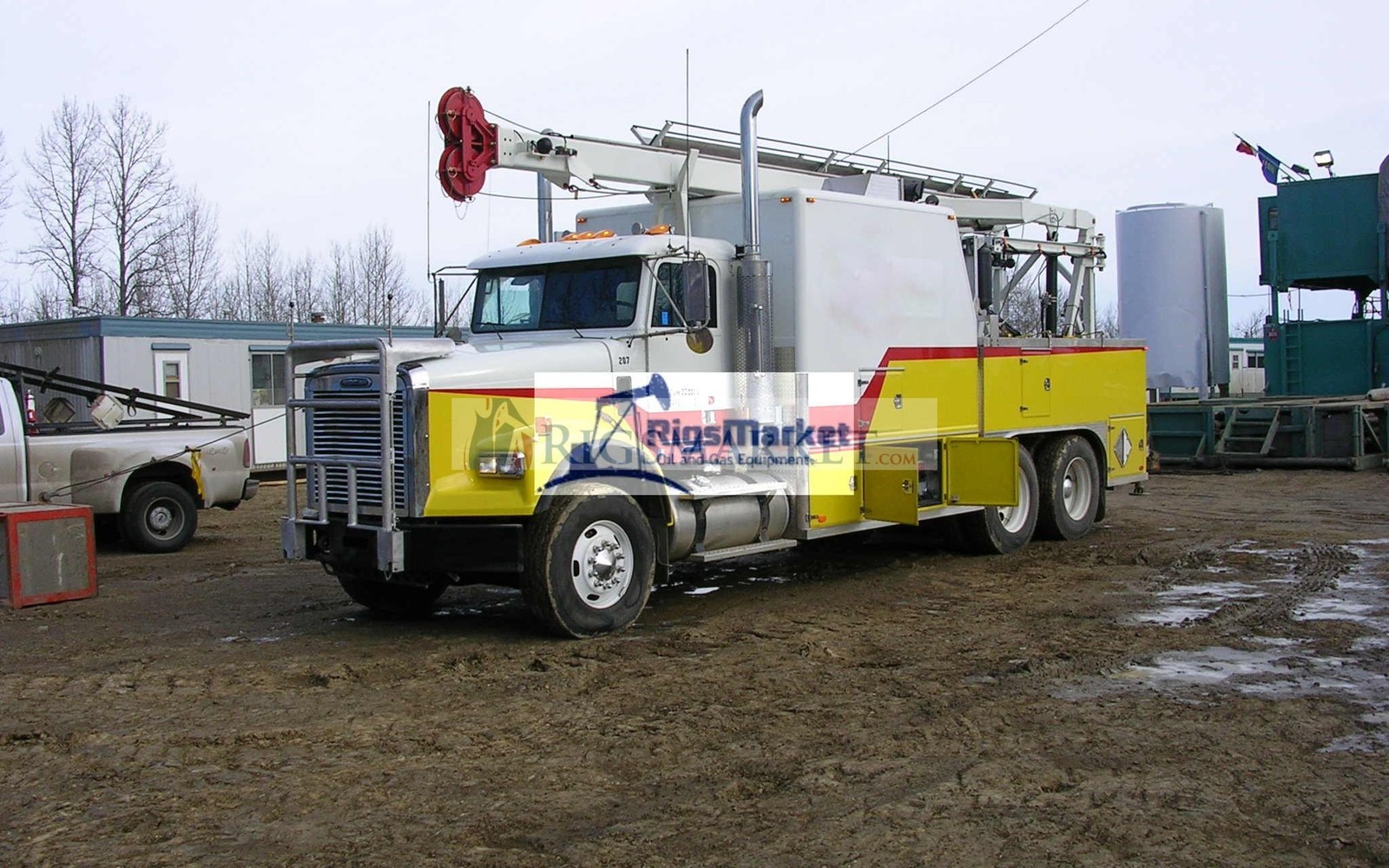
Kill Truck Financing
Finance kill trucks and well control pressure pumping units for well intervention work. Loans and leases from $50k, short-app funding to $400k, 1-2 week.
A blowout or uncontrolled kick does not wait for a bank to schedule a loan committee. Well control and kill operations run on a different clock than conventional oilfield service, and the equipment that supports them has to be available the moment the call comes in. Kill trucks are high-specification, high-demand assets, and financing them requires a lender who understands the work they do and the operators who need them ready on short notice.
Kill trucks combine a high-pressure pump unit with storage tanks and the control plumbing needed to inject kill fluids into a wellbore under pressure. Working capacities typically start around 1,500 psi on smaller well service units and climb to 15,000 psi or beyond on purpose-built well control spreads. The pump ratings, tank volume, and mixing capability all feed into the purchase price, which can range from roughly $150,000 on a used single-unit truck to well above $1 million on a fully equipped, high-pressure well control package.
We finance kill trucks at both ends of that range for well servicing companies and independent well control contractors. The financing structure lines up with how the equipment earns, whether that is on a day-rate contract, a utilization-based agreement, or standby retainer arrangements common in active basins like the Permian or Eagle Ford.
How lenders evaluate kill truck collateral
Kill trucks occupy a specialized category in equipment lending. The combination of a commercial vehicle, high-pressure pump, and certified well control equipment means the asset does not fit cleanly into standard heavy-truck or construction equipment valuations. We work with lenders who maintain their own oilfield service equipment appraisal data, so the loan-to-value is based on what these units actually sell for in the secondary market, not what a generalist database guesses.
Factors that affect collateral value and approval include pump horsepower, pressure rating certification, tank capacity, and whether the unit carries current API and manufacturer certifications for well control service. A kill truck with documented annual certification and recent pump overhaul is significantly more fundable than one with lapsed certifications, even if the underlying equipment is otherwise sound. If certifications are current and the unit is actively contracted, approval timelines compress considerably.
The chassis matters too. Units built on a Class 8 platform from Kenworth or Mack Trucks tend to carry better residual value than lighter platforms, which gives the lender more comfort on the collateral side. We have financed kill trucks across a wide range of chassis configurations, including some that were custom-built for specific operator requirements.
New units versus used kill trucks: what the financing looks like
New kill truck packages from OEM manufacturers typically finance on terms from 36 to 72 months, with down payment requirements that vary by lender and credit profile. Some operators prefer a fair market value lease on new equipment because it preserves the option to upgrade at the end of the term without being locked into old specifications as pump and control technology evolves.
Used kill trucks are the more common transaction in our portfolio. A 2014 to 2019 unit in active well control service is a typical deal, and we have closed transactions on trucks that were purchased through private party sales from operators who were downsizing their fleets. The key is documentation: pump service history, pressure test records, and evidence of active contracts or past utilization. Used equipment financing on well control trucks is not a novelty for us, it is a regular part of the portfolio.
Buyers with prior oilfield experience who are going out on their own for the first time can often qualify under startup and new business programs if they have strong personal credit or can demonstrate relevant contracts or letters of intent from operators. First-time buyers should expect slightly higher down payment requirements but should not assume the deal is impossible.
Typical financing structure for kill trucks
Terms for kill truck financing vary based on the age and condition of the equipment, the credit profile of the borrower, and the loan-to-value ratio. Typical structures run from 36 to 84 months, with longer terms available on newer, lower-mileage units. The goal is a monthly payment that sits comfortably against the day rate or contract revenue the truck generates, leaving enough margin for operating costs and maintenance without putting the business in a cash squeeze between jobs.
For operators who prefer not to own the asset outright, leasing is an option. A TRAC lease or FMV lease on a kill truck gives you the use of the unit, a predictable monthly payment, and flexibility at end of term to purchase, renew, or upgrade. TRAC leases are common on over-the-road oilfield trucks because the terminal rental adjustment clause lets you set a residual that matches your expected depreciation curve.
We do not guarantee rates, because rate depends on credit and market conditions at time of funding. What we can tell you is that we shop the transaction across multiple available equipment finance programs to find the best available terms for your specific credit profile and equipment package.
Questions before you send the file.
Straight answers about kill truck financing, documentation, timing, and equipment eligibility.
Can I finance a kill truck that a major operator is leasing back to me through a service agreement?
Yes, with some caveats. The structure depends on who holds title and what the service agreement says about the equipment. In some cases, operators finance a unit they own outright and then place it under a service agreement. We have handled both scenarios and can work through the contract structure with you to find the right financing path.
My kill truck is tied to a spot contract that ends in six months. Will lenders finance a truck without a long-term contract behind it?
Many of our lenders do not require a contract of any specific length. They evaluate the operator's overall revenue history and the asset's marketability in the secondary market. If the business has a track record of securing work and the equipment is deployable in the basin, most transactions are financeable without a multi-year contract in hand.
Does the pump certification status affect whether I can get financed?
It affects both the appraised value and the lender's comfort with the collateral. A kill truck with lapsed pressure certifications will carry a lower collateral value than a certified unit, which can affect the loan-to-value the lender is willing to accept. If certifications are lapsed, factor the cost to recertify into your financing request so the unit is in a lendable state when the deal closes.
I refinanced my kill truck two years ago and still owe a balance. Can I pull cash out of it now?
A cash-out refinance is possible if the current payoff is below the truck's fair market value. We look at the gap between what you owe and what the truck is worth, then structure a new loan that pays off the existing lien and puts the remainder in your account. The amount available depends on current market value and your credit profile.
Are there tax advantages to financing a kill truck through a lease versus a loan?
That is a question for your tax advisor, but the general framework is this: a loan with a $1 buyout is treated as a purchase for tax purposes and allows for depreciation and potential Section 179 deductions. An operating lease payment is typically fully deductible as a business expense. The right choice depends on your tax situation and whether you want to own the asset at end of term.
Quote desk
Get terms on Kill Truck Financing.
Send the asset details, seller quote, and target timing. We will review the request and tell you what documentation is needed next.